Only one machine in the world has achieved net fusion energy, a crucial fusion performance threshold called Q>1. Here’s why we at Commonwealth Fusion Systems (CFS) are confident our SPARC fusion demonstration machine will be the next.
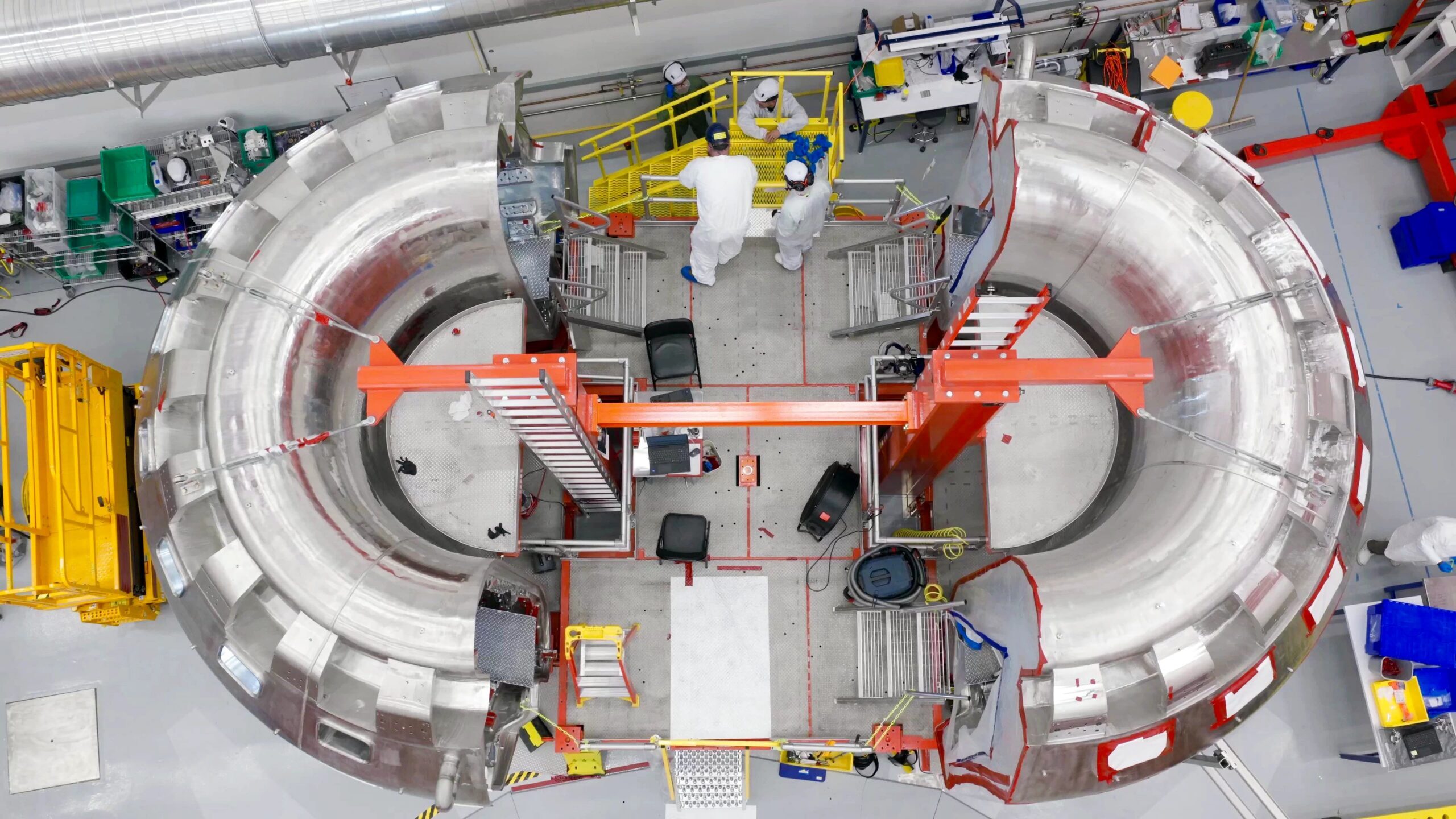
Our conviction that Q>1 is comfortably within reach begins with our 1,000+ person team of physicists, engineers, fabricators, and operators who’ve learned from decades of experience running a type of fusion machine called the tokamak. Next is SPARC’s cutting-edge design, a tokamak we’re building to reach much higher performance.
“We have some margin to achieve Q>1. We’re not sitting right at the threshold, hoping the stars align perfectly,” said Phil Snyder, Vice President of Plasma Physics. “SPARC is designed to reach Q>10, so Q>1 is not an extremely difficult milestone.”
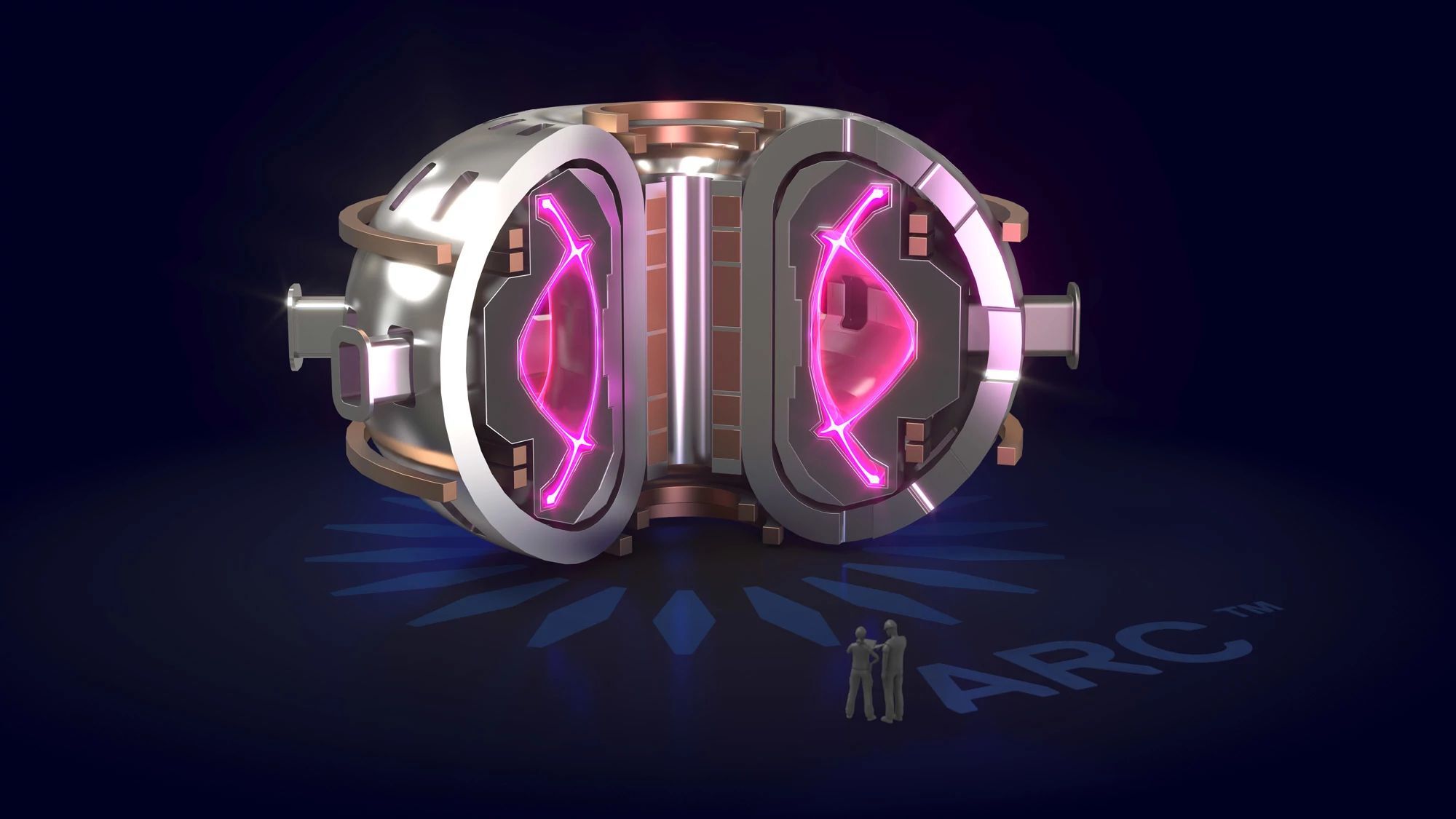
When we do reach Q>1 — generating more energy from the fusion process than needed to sustain it — it’ll be a big deal. Q>1 will prove we’ve got the core physics, engineering, manufacturing, and operations to enable our ARC fusion power plants. And that’ll clear the path for this clean, safe, secure source of energy to spread across the world’s power grids.
Here are key reasons why we’re so confident all our work will produce that colossal Q>1 payoff after we start operating SPARC in coming months:
- SPARC builds on deep expertise developed over decades of tokamak research
- Our conservative design doesn’t demand enormous innovation beyond our high-temperature superconducting (HTS) magnets
- We’ve proven those HTS magnets work — and that we can manufacture them
- Tightly coupled computer models and real-world data both back our approach
- Abundant configuration and operational options give us many routes to reach Q>1
So far the only Q>1 fusion machine is the National Ignition Facility (NIF) at Lawrence Livermore National Laboratory, and it uses lasers to heat, confine, and control our plasma, not the magnets we’ll use. We don’t need to rely on NIF as a precedent, though.
Top-notch magnets
That’s not to say the SPARC effort is simple. That’s why our team tackled the toughest challenges up front — starting with our HTS magnets. This new technology was the top concern among plasma physics experts reviewing our early SPARC ideas.
“Everybody who looked at SPARC who knew anything about plasma physics said we’d be able to get to Q>1. Their only concern was that we wouldn’t be able to build the HTS magnets,” Chief Science Officer Brandon Sorbom recounted. “Well, guess what? Now it’s pretty hard to say the magnets won’t work.”
Magnets were a key early CFS focus, the subject of years of careful research, simulation, prototyping, and testing. Our first large-scale prototype, the Toroidal Field Model Coil (TFMC), proved in 2021 that our non-insulated, steady-state magnets worked. That unlocked a $1.8 billion funding round. And the Central Solenoid Model Coil (CSMC) proved our cable-based, pulsed magnets in 2024.
When we moved from prototype to production, Senior Electromagnetic Analysis Engineer Robert Davis was worried about inconsistent magnet performance. That would have limited SPARC capabilities, undermined faith in our computer models, and made operations harder.
But inconsistencies aren’t a problem. “We’ve tested 15 TF magnets now,” Davis said. They’re basically the same thing.”
Different paths to Q>1
Turning on a tokamak isn’t a simple matter of flipping a big power switch. Instead, a variety of controls govern choices like how we’ll ramp up electrical current in different magnets, turn on radio-frequency systems that heat the plasma, and inject fuel.
SPARC’s first full operations will produce what’s called first plasma — a kind of training wheels mode for fusion machines. Then we’ll gradually run more sophisticated, higher-power pulses leading up to Q>1.
There are different routes to the climax. For example, we could crank SPARC’s magnets all the way to their top magnetic field of 12.2 tesla while putting the plasma in a relatively laid-back configuration called L-mode. Alternatively, we could operate the main magnets at a lower magnetic field but put the plasma in a more intense H-mode configuration. That mode keeps temperatures at the edge of SPARC’s plasma hotter and produces a higher plasma pressure.
In other words, we’ll have room to maneuver. Operating SPARC in the run-up to the Q>1 pulses will show us the best approach.
Experience, data, and simulations bolstering SPARC
A wealth of real-world data, knowledge, and computer simulations also underpin our confidence.
Our employees have experience designing, building, and operating tokamaks including JET, DIII-D, NSTX-U, MAST-U, and ASDEX Upgrade. Our co-founders worked on the Alcator C-Mod tokamak at MIT’s Plasma Science and Fusion Center.
Real-world data and computer simulations also guide us to configure SPARC the best way. And we’ve validated our computer simulations by showing they correctly predict the performance in thousands of fusion pulse cases on several real-world tokamaks, Snyder said.
SPARC is a “largely uncontroversial” design, Snyder added, and years ago we incorporated fusion community suggestions to bring Q = 11 within reach. One observers’ concern was handling exhaust — the hot particles we need to pull out of plasma — in a compact tokamak like SPARC. “Upon further examination, we’re finding that the high density of compact tokamaks makes the exhaust problem easier and balances out the challenge associated with compactness,” he said.
We also made conservative predictions about how well SPARC will work. “We could get much higher performance,” Sorbom said. “There are a lot of things in the plasma physics that we didn’t take credit for in the design of SPARC.”
Not a huge leap
The closest a tokamak has come to net fusion energy (Q>1) is JET with Q=0.67. And CFS — with our modern high-field tokamak, a strong team, better computer models, and better data — is in a better position to take that last step.
“All this research got us up to the point where we are now,” Sorbom said. “It’s a pretty easy extrapolation to get us the rest of the way from Q=0.67 to Q>1.”