Four CFS physicists answer your burning questions about our ARC power plant
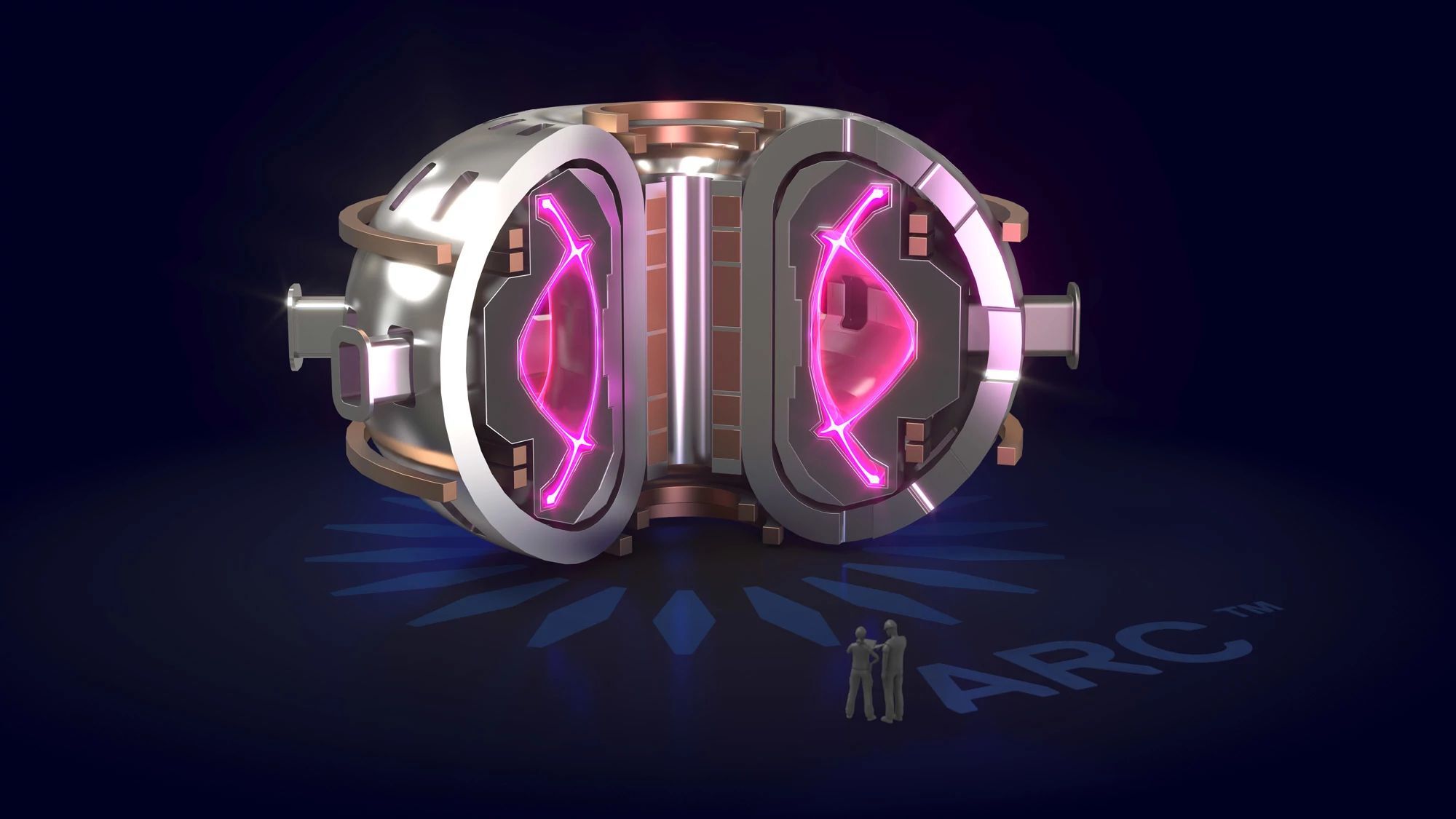
If you have some questions about the physics underpinnings of our ARC fusion power plant, we have some answers. For our second “Ask Me Anything” (AMA) on Reddit’s r/fusion subreddit, four Commonwealth Fusion Systems (CFS) physicists tackled questions about this key phase developing a tokamak that can put 400 megawatts of net electricity on the power grid in the early 2030s.
The event centered around our five recently published, peer-reviewed ARC physics basis papers, which demonstrate the science of how our ARC fusion power plants will work. To best answer questions about the papers, we looked inside CFS for the ideal panel: Four lead authors who were among 58 co-authors from around the world.
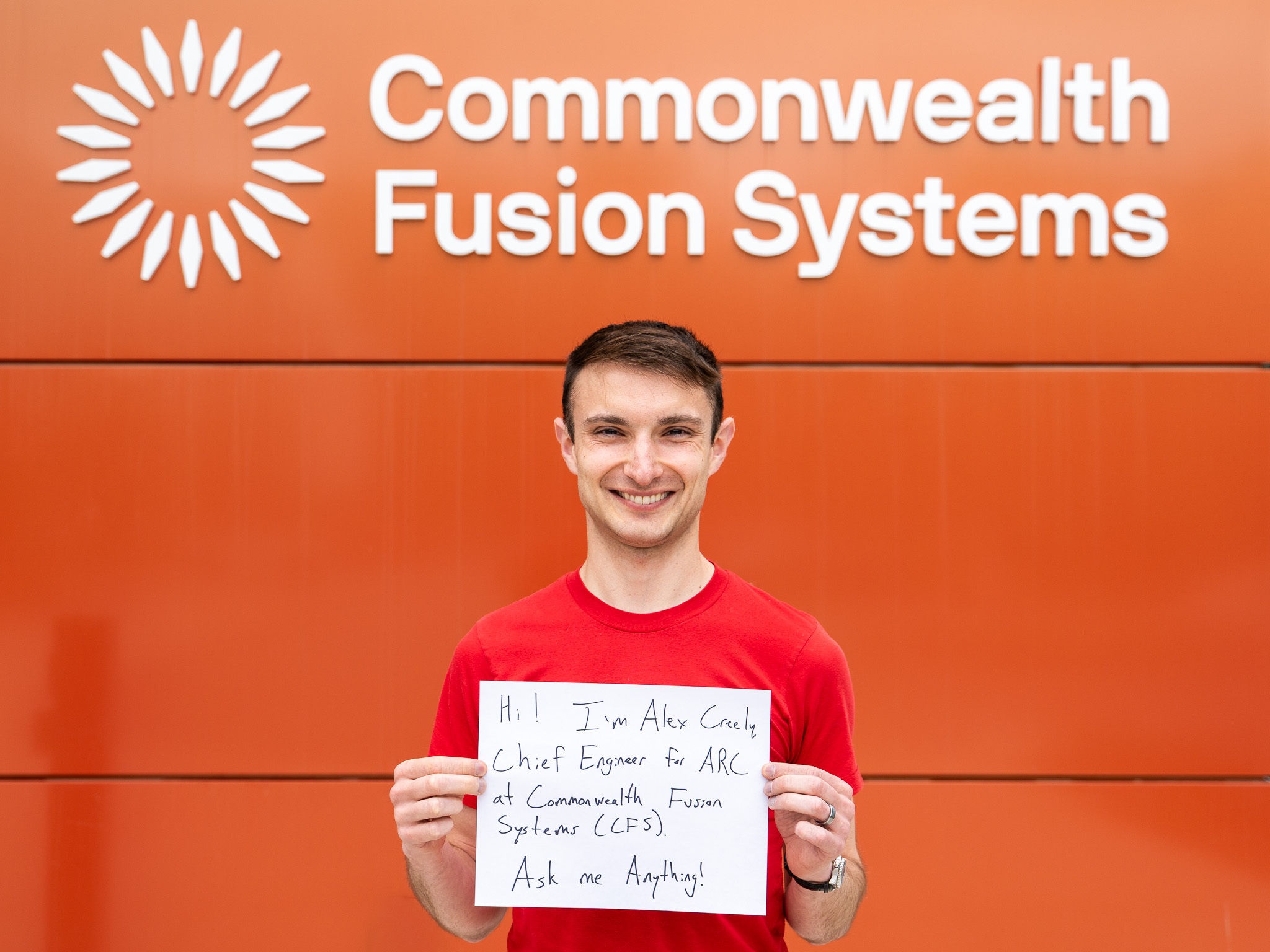
The four CFS physicists in the AMA: Alex Creely, Chief Engineer for ARC Conceptual Design; Jon Hillesheim, CFS Principal Scientist and lead author of the overview paper; Tom Body, CFS Senior Scientist and a lead author on the paper about heat exhaust; and Ryan Sweeney, CFS Manager of Disruption Physics and lead author of the paper about handling plasma disruptions.
The question-and-answer session follows our first AMA with Brandon Sorbom, CFS’ Chief Science Officer and Co-founder, which we held in February.
The physics basis papers, published this June in the Journal of Plasma Physics, are important for both CFS and the future of fusion energy, covering many aspects of the plasma physics at play in our ARC power plant, including challenges like plasma disruptions and heat exhaust. They also show how transparency and rigorous research can help build trust in what we all know is a very difficult endeavor.




All told, our panel answered 45 questions covering a wide range of topics — how we use computer modeling, why our SPARC fusion pulses will be so much shorter than in the ARC plant, the techno-economics of our fusion approach, and the way SPARC will address technical challenges for the ARC effort. Check out some of our favorites below:
1. How do you plan to close the cost gap to solar/natural gas?
Really good question. At the end of the day, a fusion power plant is a product, and we need to be able to sell it at a price that the market will accept. Techno-economics has been a core part of the ARC design from the very beginning, with our CFS techno-economics team sitting right with the engineering design team at every stage of the process. We’re attacking this from a bunch of angles: improving component manufacturing for the first ARC based on SPARC learnings, ruthlessly simplifying systems, doing R&D to find better and more efficient supporting systems, and planning to ramp up production after the first ARC for production scale. As you might guess, we have thoughts (many, many thoughts) on the topic of cost, and we’re planning on sharing more publicly at some point.
–Alex Creely
2. What are the big known unknowns in tokamak plasma physics? How hard would they be to solve?
In a way, this question is asking, “Why not just build ARC now? What do we want to know from SPARC before finalizing the ARC design?” A couple of the big uncertainties are confirming the scaling of both disruption behavior and runaway electrons to high-current operations, and demonstrating heat exhaust at high power. SPARC will confront these issues head on. We’ll also want to confirm our predictions for fusion performance and reduce those uncertainties that impact how large ARC needs to be. As for how hard, this is why we’re building SPARC: A SPARC-scale experiment is necessary to close these risks.
–Jon Hillesheim
SPARC won’t include any tritium breeding technology itself. Instead we’ll work on separate R&D on tritium production that we’ll combine together on ARC. On molten salt technology specifically, we have plans to build a ~50 MW thermal FLiBe loop to prove out all of the engineering tech there… You might be interested in our recent news: CFS will be the first organization to participate in UKAEA’s LIBRTI project for working on tritium production technology.
–Alex Creely
4. Are there any design improvements or changes you are already thinking about?
Definitely! The ARC physics papers give a snapshot of the models, thinking, and design that we had when we wrote them — but these are constantly evolving and improving. For example, since publishing the papers we’ve done some big physics scans with the models used in the papers, letting us fine-tune the shape of the plasma and the divertors. Although these changes are relatively small, they can have a big impact on the performance of the plasma, which in turn has a big impact on the projected cost of electricity.
–Tom Body
5. What major hurdles do you expect in implementation?
As you can see in our ARC disruptions paper, one hurdle is designing the structures to handle the disruption forces. “Hurdle” is a good term because we expect it won’t be easy to clear, but our experience designing SPARC gives us confidence that it can be done. The list of materials suitable for use in ARC is shorter than SPARC, and we need to consider how strong materials are at the end of their lifecycle in the machine, but all of the knowledge gained by CFS today suggests it is a hurdle and not a showstopper.
–Ryan Sweeney
Note first, there are two time scales here that are important. One is pulse length, and the other is confinement time, where the energy confinement time is the plasma stored energy divided by the heating power, under stationary conditions. The pulse length is limited to about 10 seconds in SPARC because it has no active cooling systems. Long-pulse tokamaks like EAST, WEST, and KSTAR, have water cooling systems, enabling long pulse operation that requires active cooling of all plasma facing surfaces. CFS decided to keep the SPARC design simple and lower cost, to not do long pulse operation. The energy confinement time in a high fusion performance SPARC pulse is expected to be ~800 milliseconds, so >10 confinement times in a 10 second pulse. We expect this approach will be sufficient to retire the key physics risks for ARC, although data from long-pulse devices running ARC-relevant scenarios could provide added value.
–Jon Hillesheim
Yes! We’re designing a fusion power plant to optimize overall for cost, not just optimize for plasma physics. For example, a lot of recent physics work continually pushes you to lower aspect ratio (closer to a spherical tokamak), but the overall design we found optimizes toward higher aspect ratio once you’ve accounted for the cost of magnets, shielding materials, and component lifetimes. We’ve also done interesting cost optimizations of total HTS content and of magnet operating temperature.
–Alex Creely
8. How small can a fusion reactor be made?
Depends on how much power you want to make. With an ARC plant, we’re targeting 400 MW net electricity delivered to the grid, based on generating about 1.13 GW of fusion power. Due to the use of HTS magnets, we can operate at a high magnetic field, resulting in a smaller device than ITER or many DEMO concepts. Could ARC be even smaller and still deliver 400 MW? As discussed in detail in the ARC magnetohydrodynamics (MHD) paper, ARC operates at less than half of the normalized pressure limit set by the ideal kink mode. This is a conservative choice, to try to operate far from stability boundaries, but it does leave open the pathway that second- or third-generation ARC plants could be smaller, based on what we learn from the first one.
It’s important to note also that there are other scaling limits for fusion power plants. Your blanket must be thick enough to capture energy from the high-speed neutrons that fusion produces and to shield the rest of the machine from them. And because of technology scaling considerations, electricity from a smaller fusion power plant might be more expensive than for a larger plant, e.g. some of the best shielding materials are expensive.
–Jon Hillesheim