Diagnostics: How to know your fusion machine is working — or what went wrong

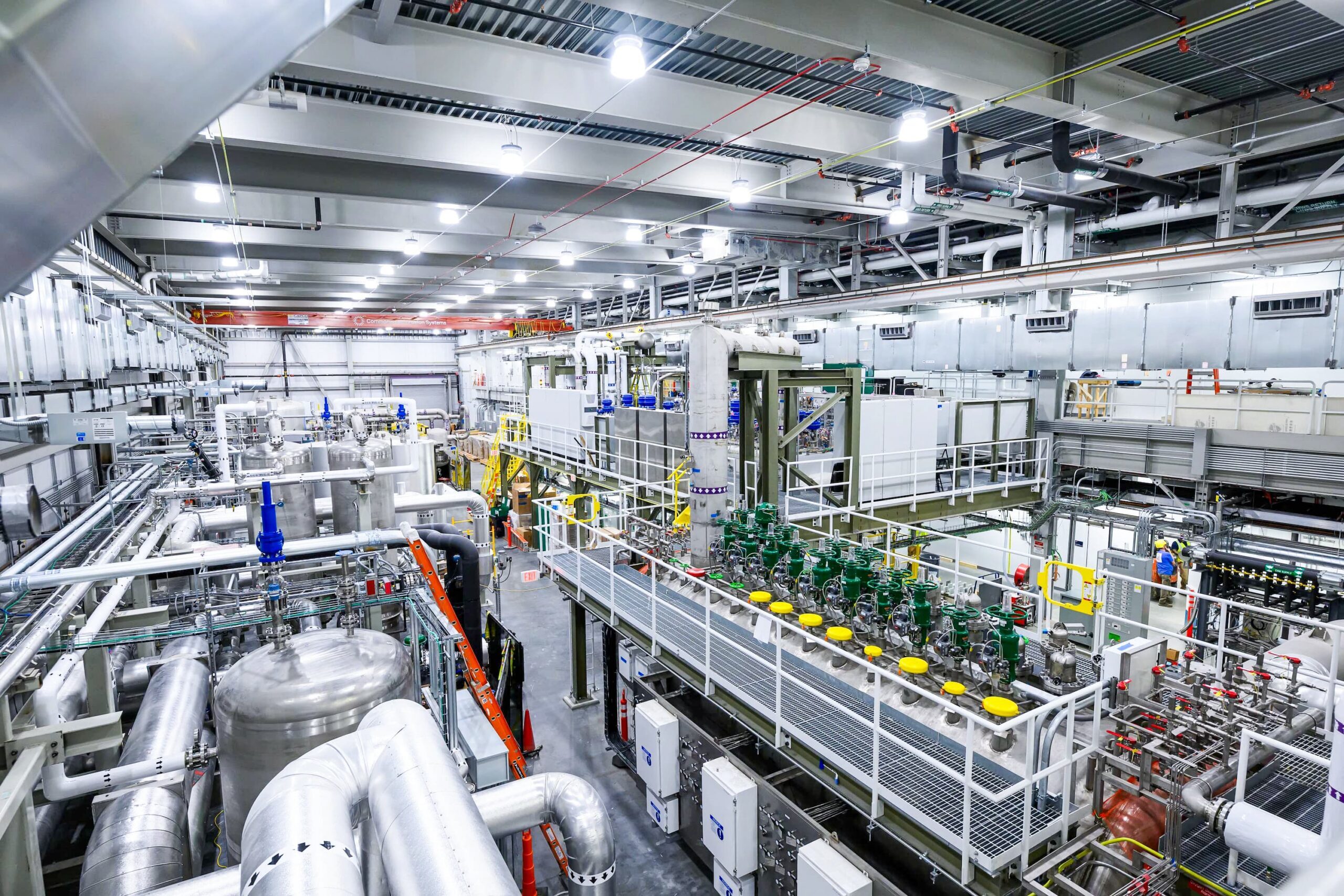
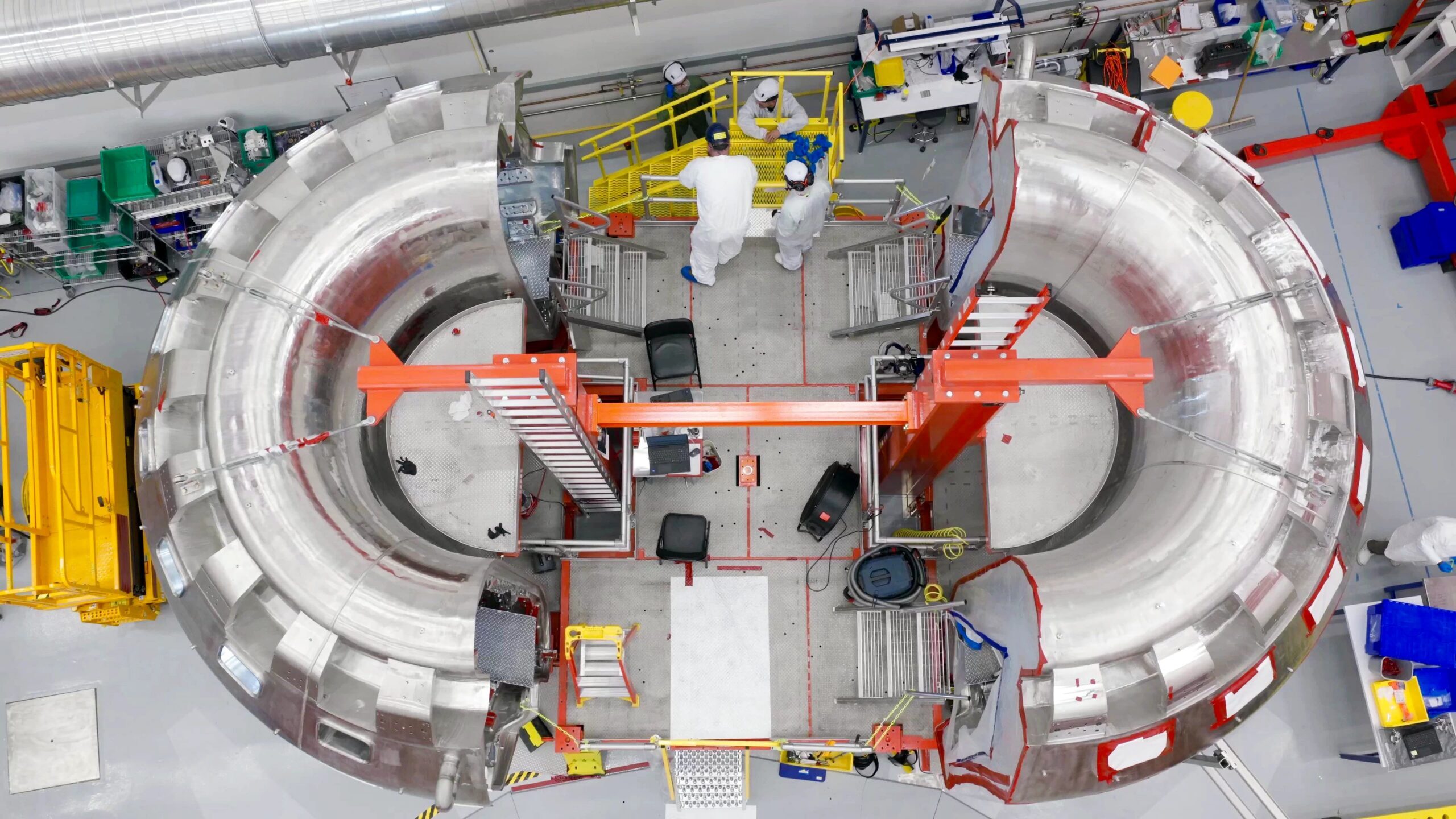
Photo: The SPARC neutron camera system will measure how many neutrons travel into these apertures, letting us determine where fusion is happening inside the machine and calculate just how much fusion power SPARC is producing.
At the heart of our SPARC fusion machine will be a plasma, a spectacularly hot cloud of charged particles following complicated paths inside a steel vacuum vessel. At the same time that those ions and electrons respond to surrounding electric and magnetic fields, their motion changes those fields.
If that seems tricky to understand, it’s because it is.
And yet, over decades of fusion work, scientists and engineers have figured out how to do so well enough to run dozens of fusion machines. An area of expertise — diagnostics — combines different types of sensors and calculations to grasp the evolving, three-dimensional nature of the plasma. SPARC will be equipped with more than 2,500 sensors from about 100 instruments.
“A high-temperature plasma is giving off copious amounts of information about itself, broadcasting its behavior,” said Matt Reinke, leader of the SPARC diagnostics team. “It’s remarkable how it can be probed physically or with electromagnetic waves to tell you even more.”
This week, at the 26th High Temperature Plasma Diagnostics (HTPD) conference, researchers from Commonwealth Fusion Systems (CFS) are showing our newest work on diagnostics for SPARC, the machine we’re building right now to demonstrate net fusion energy and pave the way for fusion power on the electricity grid. Our work, accelerated by collaborations with outside researchers and underpinned by peer-reviewed research, is the best way to ensure our diagnostics subsystems will work.
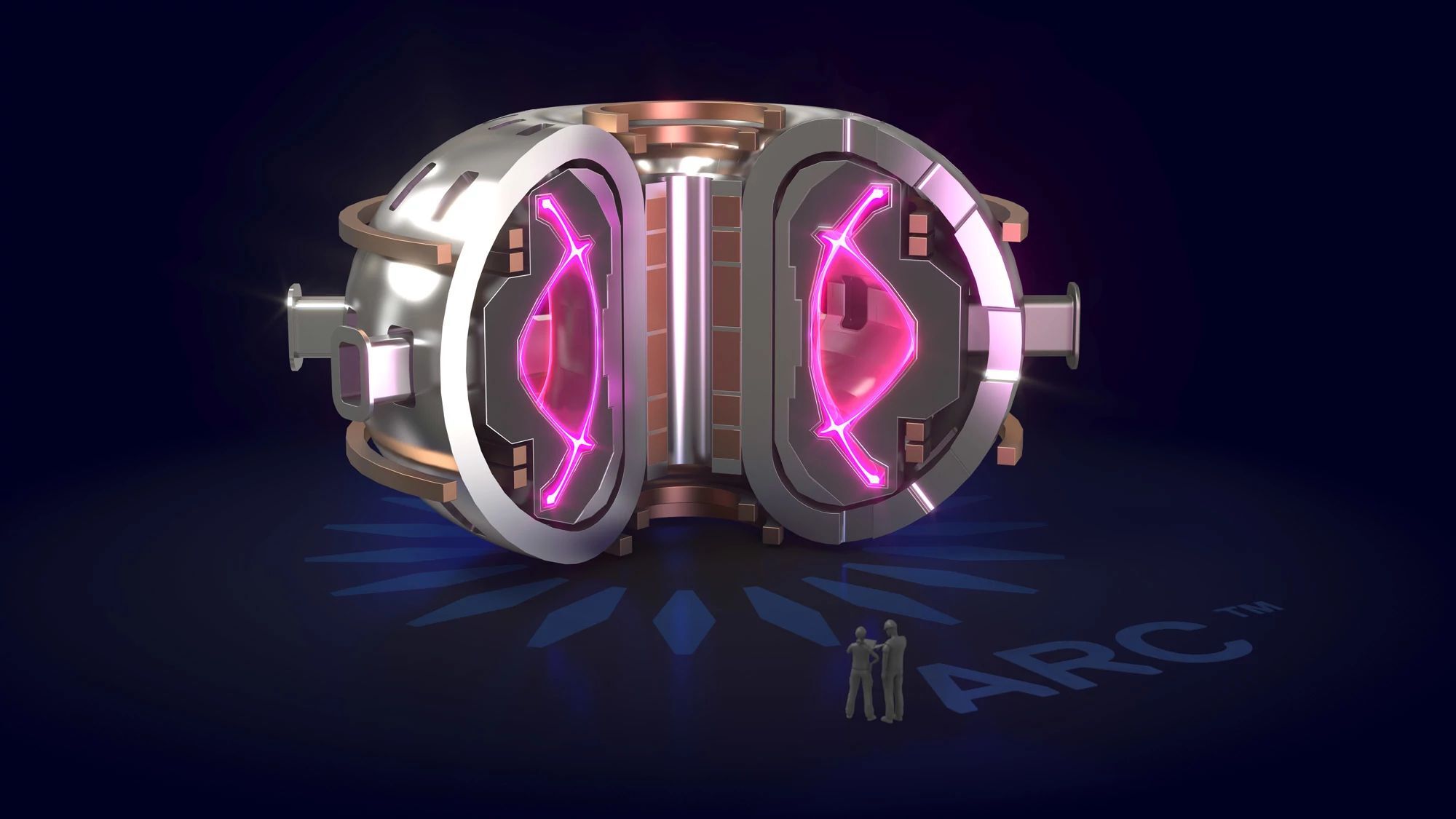
In short, diagnostics provide the toolset that’ll let us prove when SPARC has created net fusion energy — a key milestone called Q>1 in scientific circles — and that we’re not fooling ourselves about SPARC’s performance. And over SPARC’s lifetime, diagnostics are core to understanding how best to operate the tokamak so we can pave the way for its successors, the ARC fusion power plants.
Fooling yourself is a real risk: More than once in fusion’s history, researchers have seen what they thought were triumphs turn into globally recognized failures.
One example dates from 1988, when Stanley Pons and Martin Fleischmann claimed “cold fusion” success at the University of Utah. Later — after breathless press coverage — that proved to be in error. Measuring heat output from the experiment was harder than the researchers thought.
An earlier fusion embarrassment came with the Zeta project in the U.K in 1958. A press conference to discuss promising results based on neutron measurements produced dramatic headlines like : “A Sun of our own!” and “Unlimited fuel for millions of years.”
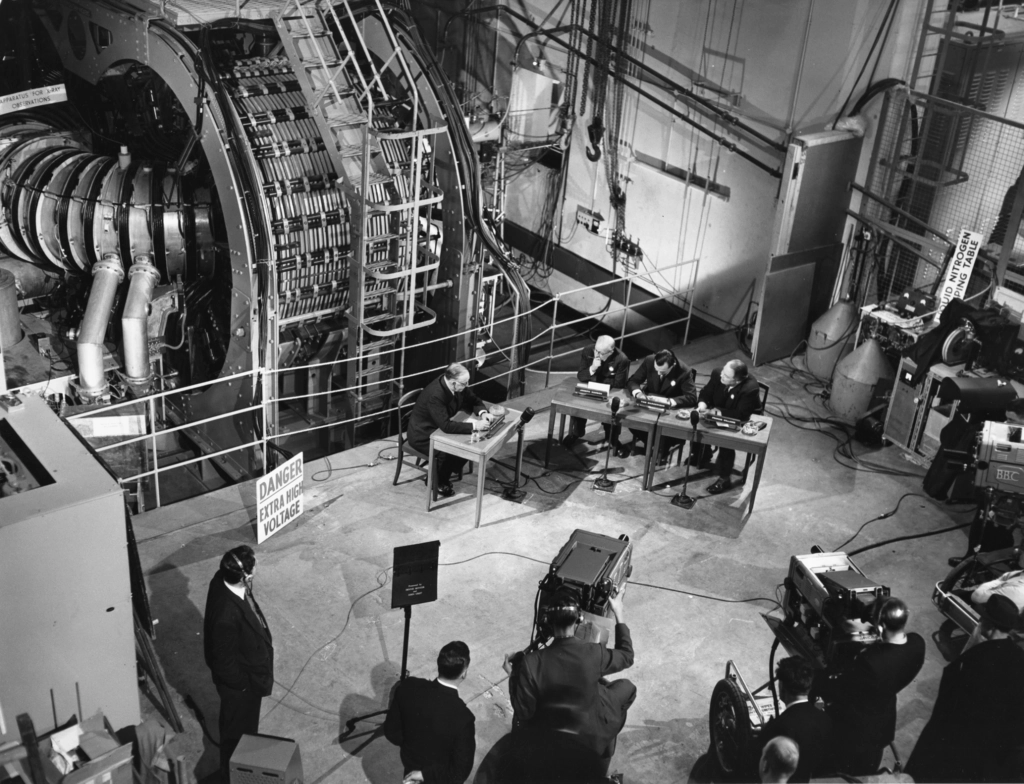
Other researchers found problems with the Zeta results, though, and four months later, the project had to issue a correction that there wasn’t in fact any fusion.
These kinds of mistakes carry tremendous reputational damage, and not just for the researchers directly involved. Fusion flops have sometimes set the field back dramatically by eroding trust and fueling skeptics’ doubts.
Conversely, good diagnostics can engender trust. Fusion researchers were skeptical about Soviet plasma performance claims from a fusion machine called T3 in 1968. A U.K. team, invited to investigate despite Cold War restrictions, carried an early laser behind the Iron Curtain for advanced diagnostic work that in 1969 proved the Soviets correct.
That unleashed a surge of global innovation in tokamaks, the fusion machines that use a donut-shaped arrangement of superstrong magnets to confine and control our plasma. Our SPARC machine is the newest in that lineage of devices.
At CFS, we understand this heritage and its challenges. More than one of our founders developed diagnostics for the Alcator C-Mod tokamak at the Massachusetts Institute of Technology. We’ve invested in people and hardware to build a team that can equip SPARC with the necessary diagnostics and interpret the results. This effort has brought experienced fusion hands together with those who are just entering the field with their own extensive new know-how and skills.
“We have a very rich culture and knowledge base to draw upon,” Reinke said. “It’s exciting to see that combined with the design, supply chain, manufacturing, and assembly strengths CFS has built.”
In addition to using well understood diagnostic techniques, we also document our diagnostics systems through peer-reviewed research. The independent validation of the peer review process establishes that we’re not fooling ourselves or anyone else.
We’ll continue to document our diagnostic systems in peer-reviewed papers, and when we reach our Q>1 fusion goals with SPARC, we expect independent reviewers will scrutinize our claims.
No acts of faith will be required to believe CFS.
Diagnostics and peer review also underpin broader efforts to track progress, including the six steps to competitive fusion energy we’ve laid out and the Department of Energy’s Milestone-Based Fusion Development Program. That foundation of trust helps investors, policymakers, and the public know when a company truly has made significant progress.
Inviting outside opinions is a healthy practice that continues to this day. Conferences like HTPD contribute to this, as do services like the capability teams from the DOE’s Advanced Research Projects Agency–Energy (ARPA-E).
SPARC will tightly seal away its plasma inside the machine to protect it from the outside world, but we’ll infer its behavior using several diagnostic systems. Here are some.
Fusion reactions, which occur when the ions combine to form slightly heavier elements, will produce fast-moving neutrons that’ll shoot out of the SPARC vacuum vessel where fusion takes place. SPARC shielding will block most of those neutrons, but we’ll let some through to understand the plasma better.
For example, neutron flux monitors will help us understand just how much fusion is taking place. And neutron cameras will provide details about where it’s taking place, backtracking the neutrons that whiz out of the machine in straight lines since electromagnetic forces have no effect on their trajectory.
Neutron cameras don’t look like your smartphone or a point-and-shoot digital camera. Long tubes called collimaters point toward the tokamak, each detecting neutrons only from a specific location. Through a technique called tomography — also used in CT scans at hospitals — computer algorithms will reconstruct internal maps of fusion activity. For SPARC, we’ve installed our imaging system into the building itself, with different lines of sight cemented into place, pointing to where the future tokamak plasma will be.
The variation in energy of the emitted neutrons also carries information. That’s why SPARC will include a magnetic proton recoil spectrometer. Two major fusion projects, the Joint European Torus (JET) and the National Ignition Facility (NIF), used this instrument to better understand their plasmas made through their most powerful fusion operations using deuterium-tritium fuel.
But before SPARC employs that kind of high power to reach Q>1, we’ll need to make sure we’re on the right track. Early SPARC operations will use ordinary hydrogen fuel instead of the heavier deuterium and tritium varieties, and that won’t produce neutrons. For this early work, we’ll use other equipment to see how we’re doing on a key fusion performance metric called the triple product.
The triple product captures three plasma characteristics: its density, its temperature, and how long we confine it. A technique called laser interferometry will reveal density from its effects on how infrared laser light travels through a plasma. We’ll measure Doppler broadening of the X-rays that the plasma emits to infer the temperature of the plasma’s ions. And we’ll compute confinement time using stored energy in the plasma derived from magnetic field measurements.
We’ll have other systems that collectively give a view of SPARC operations. Thermocouples will measure temperature in the vacuum vessel hardware. Spectroscopy will monitor light from visible light to X-rays to measure contaminants and control the balance of different hydrogen isotopes. Electrical currents flowing in devices called Langmuir probes will reveal plasma temperature and density in the cooler edge regions of SPARC.
Then there are bolometers, Thomson scattering lasers, millimeter-wave radiometers and reflectometers, Rogowski coils… this list goes on.
Many of those sensors will be linked to the outside world with special mineralized insulated cables that protect wiring from neutrons, vacuum, and high temperatures.
In commercial fusion, better diagnostic systems are less a competitive advantage and more a common set of tools. Those tools improve as our industry matures, helping equipment suppliers to grow their businesses faster.
To that end, we’re sharing at the HTPD conference some new views on our diagnostics approach.
A CFS invited talk outlines the three independent ways we’ll measure and report fusion power that’ll underpin our Q>1 announcement, while three MIT invited presentations dig further into the physics that SPARC could probe with further diagnostic enhancements.
And we show how our ideas are becoming reality with the progress building SPARC. Many posters provide updates on designs originally presented at the last HTPD conference in 2024 — but this time with pictures of in-progress builds and data from the first benchtop tests.
“It’s exciting to see the diagnostic community’s openness and sharing expand into the private fusion era,” Reinke said. “Better measurements generally help everyone.”
SPARC®, ARC™, and Fall Line Fusion Power Station™ are trademarks of Commonwealth Fusion Systems®.