How LIBRTI will help CFS verify our fusion fuel production technology
Fusion energy can turn small amounts of fuel into huge amounts of power. Here at Commonwealth Fusion Systems (CFS), we’ve got a new collaboration to help us make sure we’ll have the fuel we need to fulfill that promise.
Today, we announced that CFS will be the first organization to use a new United Kingdom Atomic Energy Authority (UKAEA) facility that’s part of its Lithium Breeding Tritium Innovation (LIBRTI) program. There, we’ll demonstrate how our power plants will produce a form of hydrogen called tritium. Tritium and a more common form of hydrogen called deuterium serve as our fusion fuel, and this collaboration will help us show the engineering approach to produce and extract tritium during plant operation.
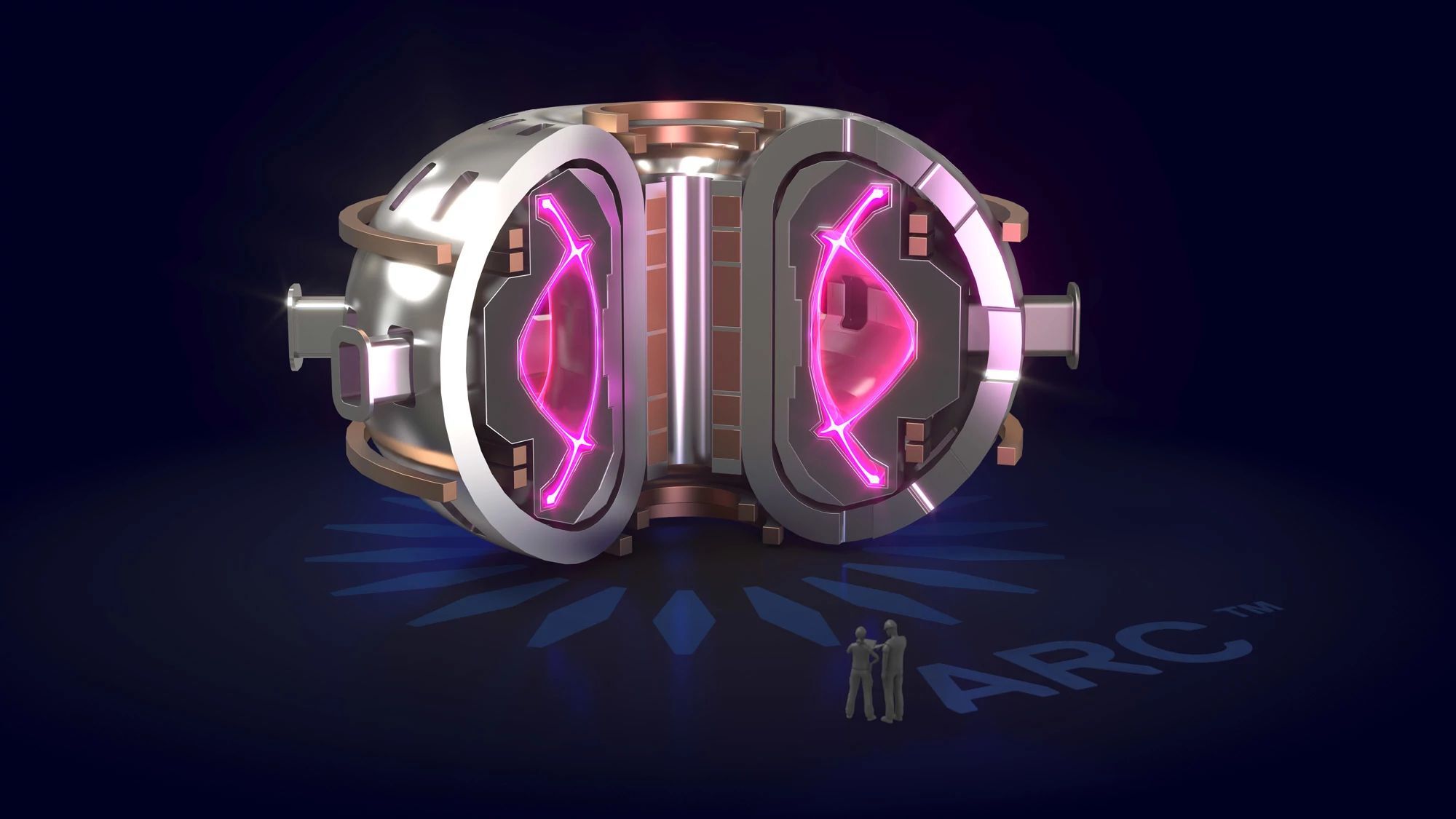
This is a big deal for developing a key part of fusion power plants. Tritium is not widely available, so we need to be able to produce and then consume this fuel within our ARC fusion power plants.
Fusion produces neutrons that collide with atoms of lithium in a part of the power plant called the blanket, and that collision produces the tritium we can extract and feed back into the machine as more fusion fuel. Simply put, we’ll need to make enough to replace what we use.
Fortunately, the physical process involved here is well understood through calculations, computer simulations, and real-world experiments. LIBRTI will let us verify that this tritium production and extraction technology works in a realistic, at-scale engineering mockup.
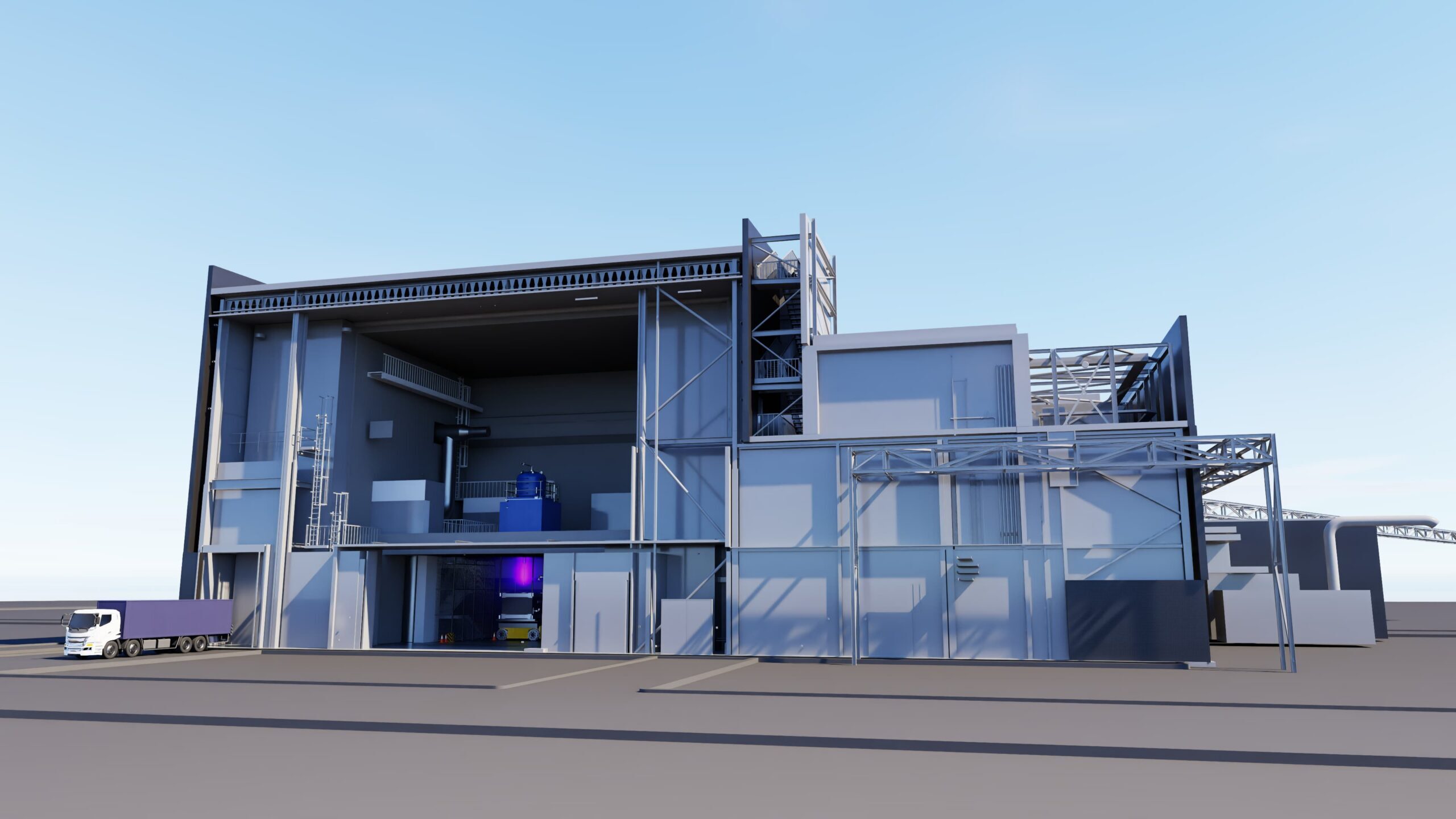
LIBRTI, to be built at the UKAEA’s Culham Campus, is a prime example of a purpose-built test facility that’ll help propel fusion onto the power grid faster. CFS will be able to bring our blanket mockup and run our tests, and UKAEA will gain valuable experience and data. And CFS isn’t alone: LIBRTI already has begun attracting other researchers from around the world.
In the world of fusion energy, we talk a lot about Q>1, the scientific term for net fusion energy. That means getting more power out of the fusion process than power in, the foundation for a fusion power plant. With our SPARC net-energy tokamak, currently nearing 80% completion outside of Boston, Massachusetts, we aim to turn the machine on next year for our Q>1 campaign.
Besides Q>1, the fusion community is also pursuing another goal: net tritium production. In effect, this means we can extract more tritium from the fusion power plant than it consumes. A measurement called tritium breeding ratio (TBR) gauges success; a TBR that’s greater than 1 — or net tritium production — means a power plant manufactures enough of its own fuel to run without needing to be constantly topped up from external sources. In addition, net tritium production will let us create a supply of tritium to start future power plants.
Our collaboration at LIBRTI will demonstrate the achievement of net tritium production in a realistic engineering subsystem. It’ll also help us exercise our tritium chemistry muscles and allow us to improve the ARC power plant’s design.
Producing tritium is an important job of the blanket. In ARC plants, it’ll serve other roles, too. Most notably, it’ll capture the kinetic energy of the fast-moving neutrons that fusion produces. That kinetic energy will heat the blanket so we can use it to boil water, make steam, run a turbine, and generate electricity. And the blanket also will shield the power plant’s magnets and other components from the heating and damage those neutrons can cause.
Achieving net tritium production is a key part of bringing fusion energy’s benefits to the world. Fusion, the power of the sun and stars, releases tremendous amounts of energy when lightweight elements like hydrogen combine.
That means millions of times less fuel is required than for coal or natural gas, and we could ship all the fuel an ARC power plant needs for its lifetime when we build it. With the amount of fuel that could be carried in the back of a pickup truck, an ARC plant will be able to produce 400 megawatts of power for a full year — enough to power hundreds of thousands of homes.
Our fusion fuels are deuterium, tritium, and lithium. Deuterium can be extracted economically from seawater, so we can simply buy what we need. Lithium for the blanket also can be purchased. Tritium is the fuel in the power plant that’s replaced by production in the blanket.
Hydrogen is the lightest, most abundant element in the universe. If you peer inside the center of most hydrogen atoms, you’ll see a nucleus with just a single proton. Deuterium is a heavier form of hydrogen whose nucleus has a neutron alongside the proton. Tritium, with two neutrons and a proton, is another bit heavier than that.
The reason you can’t find tritium naturally in any appreciable amount is because it decays radioactively into helium. Tritium’s half-life is 12.3 years, which means a sample will decline by half over that period of time. Viewed another way, about 5.5% of a sample decays away each year.
Although we’ll continuously extract an ARC plant’s tritium fuel during its operation, we’ll need some tritium to get it running. For both our SPARC fusion demonstration machine and our first ARC power plants, we’ll get our initial supply of tritium from CANDU fission reactors.
At our Massachusetts campus, we’ve begun preparing SPARC for fuel cycle operations, and we secured our radioactive materials license for SPARC in 2024. Tritium handling uses established methods from research and industry to operate safely.
LIBRTI is a significant advancement over earlier tritium production projects that’ll let us reach better engineering-relevant conclusions for an ARC plant. Among the improvements:
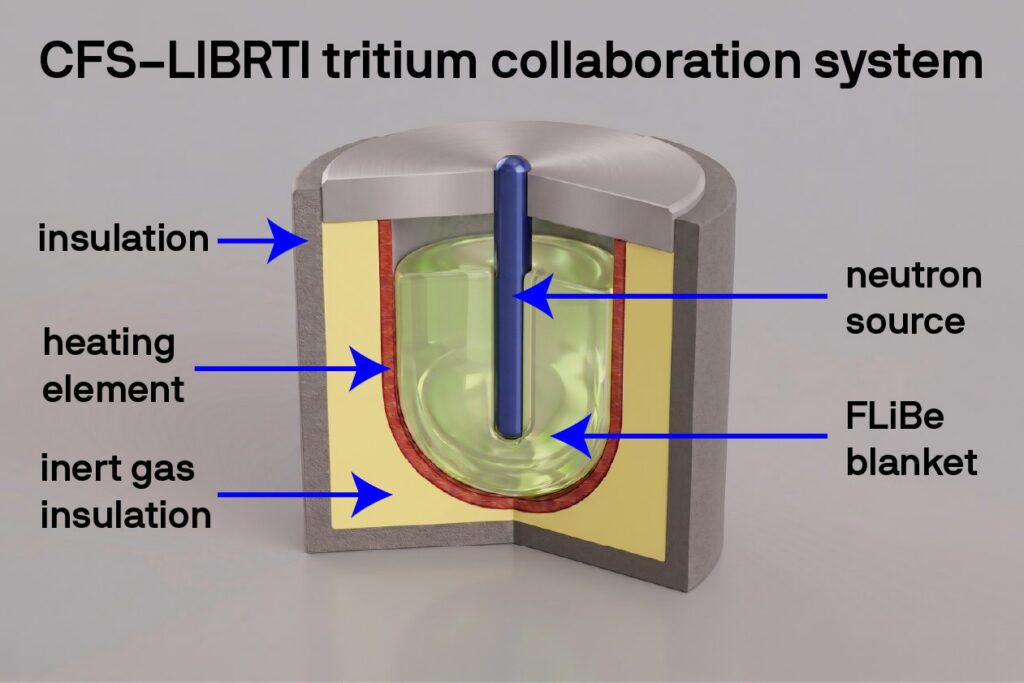
For our collaboration, UKAEA will supply the facility and the neutron source. We’ll bring our own FLiBe-filled blanket mockup and accompanying equipment to conduct the experiments.
At LIBRTI, we’ll be able to investigate tritium behavior in the blanket. By tuning the conditions of the blanket, we can influence the tritium molecules that are formed.
We’ll extract the tritium molecules made at LIBRTI using a technique called sparging. That begins by flowing a noble gas into the blanket, generating bubbles. The tritium diffuses into the bubbles and collects in a counter. These measurements allow us to calculate the TBR of an experiment.
With SPARC, we’ll show Q>1. With the LIBRTI collaboration, we’ll show the ability to produce and extract enough tritium to keep ARC running. With our ARC power plants, we’ll put that together to bring fusion’s safe, clean power to the grid.
SPARC®, ARC™, and Fall Line Fusion Power Station™ are trademarks of Commonwealth Fusion Systems®.