With the delivery of a key component — the first half of the vacuum vessel at the heart of our SPARC machine — our fusion energy plans are literally starting to take shape at Commonwealth Fusion Systems’ campus in Devens, Massachusetts.
This 48-ton half-donut-shaped steel construction is instrumental to SPARC’s mission to demonstrate the core technology for our ARC fusion power plant. We’ve already installed SPARC’s cryostat base, the foundation of a fusion machine called a tokamak, but the vacuum vessel gives a much better idea of SPARC’s final form and how it will carry us toward large-scale commercial fusion energy.
“This is a really exciting time because we’re starting to really see the pieces come together for SPARC,” Chief Science Officer and Co-founder Brandon Sorbom said.
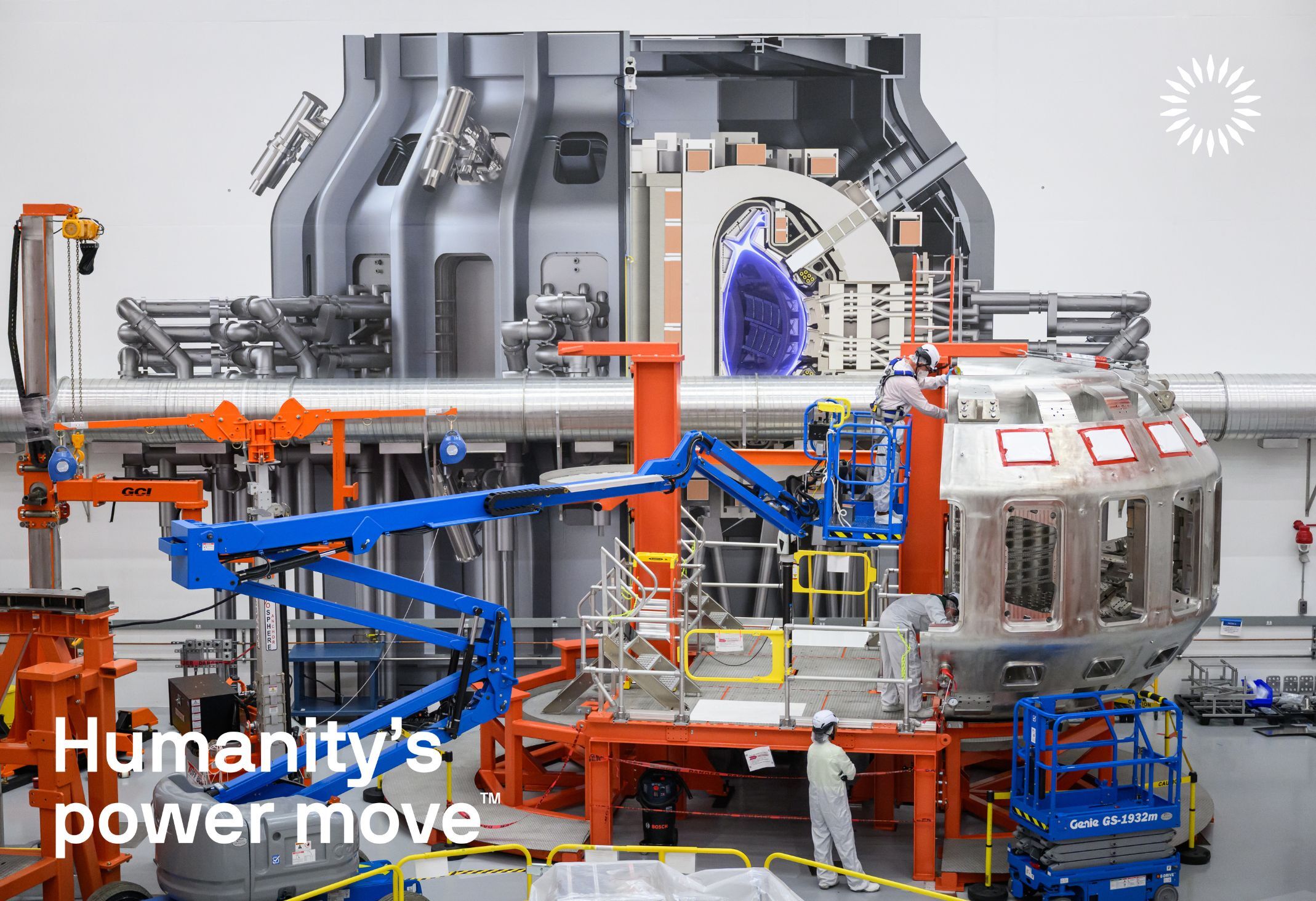
Its arrival lets us begin a new phase of SPARC assembly. On the floor of Tokamak Hall, CFS crews are now busy preparing the vacuum vessel for use by first adding diagnostic equipment and then components made of heat-tolerant tungsten metal.
Making a fusion-friendly environment
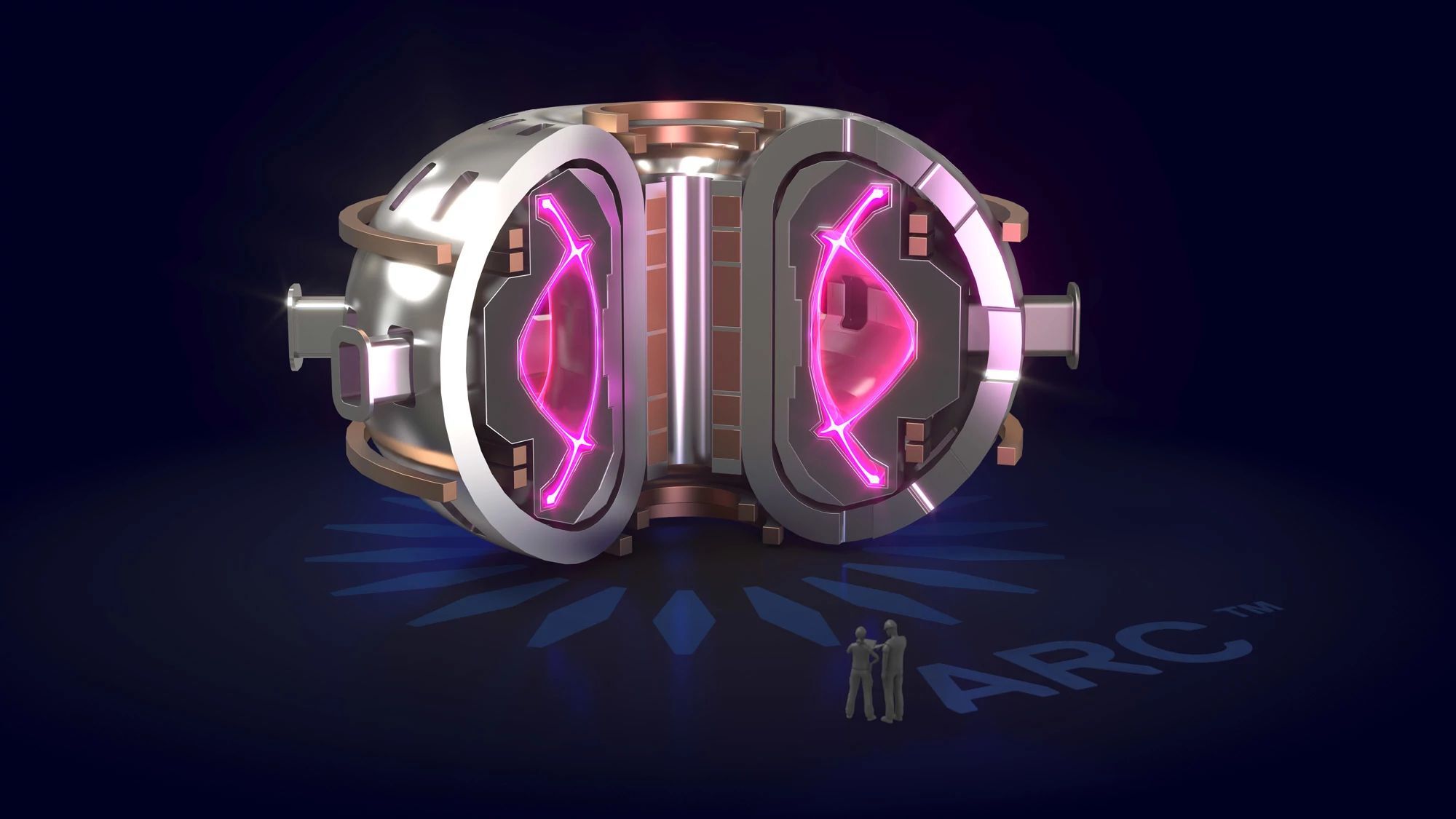
The vacuum vessel is the donut-shaped chamber inside SPARC with the critical job of housing the superhot cloud of charged particles called a plasma, our fusion fuel. The vessel’s job isn’t to control the charged plasma — that’s where the magnets surrounding the vacuum vessel come in — but rather to create an airless environment, like a pocket of outer space, in which the plasma can exist. Even a wisp of air in the vacuum vessel will snuff out the fusion reaction.
The vacuum vessel is a super-tough component. It needs to withstand heavy heat loads from being near plasma that’ll exceed 100 million degrees Celsius. And it’ll need to shoulder the strong physical forces that SPARC’s magnets will exert.
Getting the vacuum vessel onto campus and inside our Tokamak Hall for SPARC assembly required years of close coordination among several CFS teams — from diagnostics and design to thermal and structural engineering. But it also involved work to develop a supply chain that reaches outside CFS.
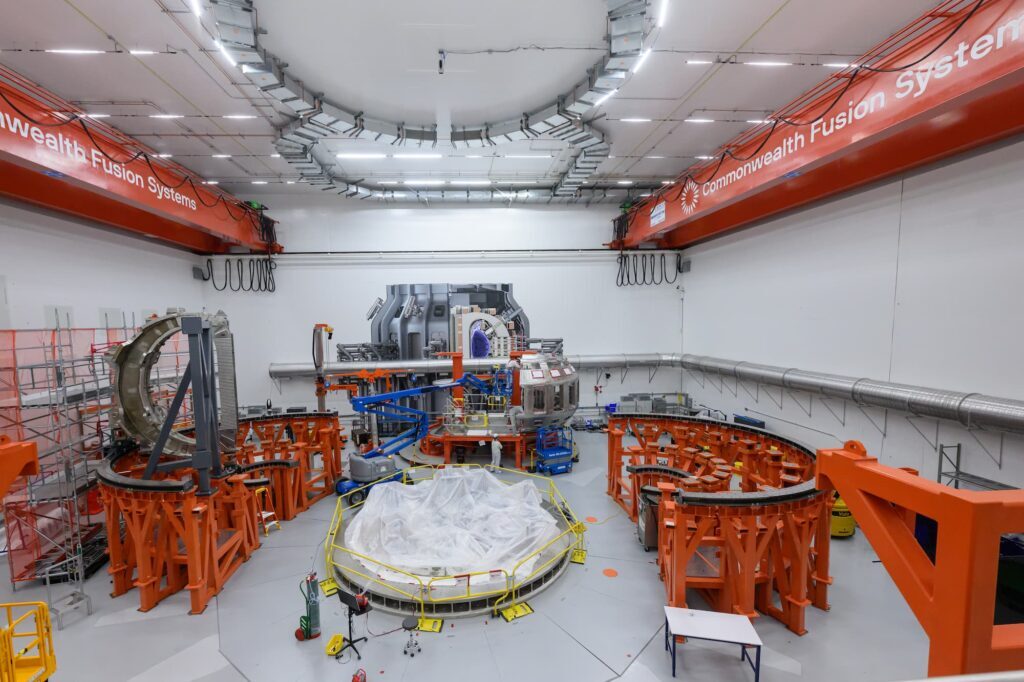
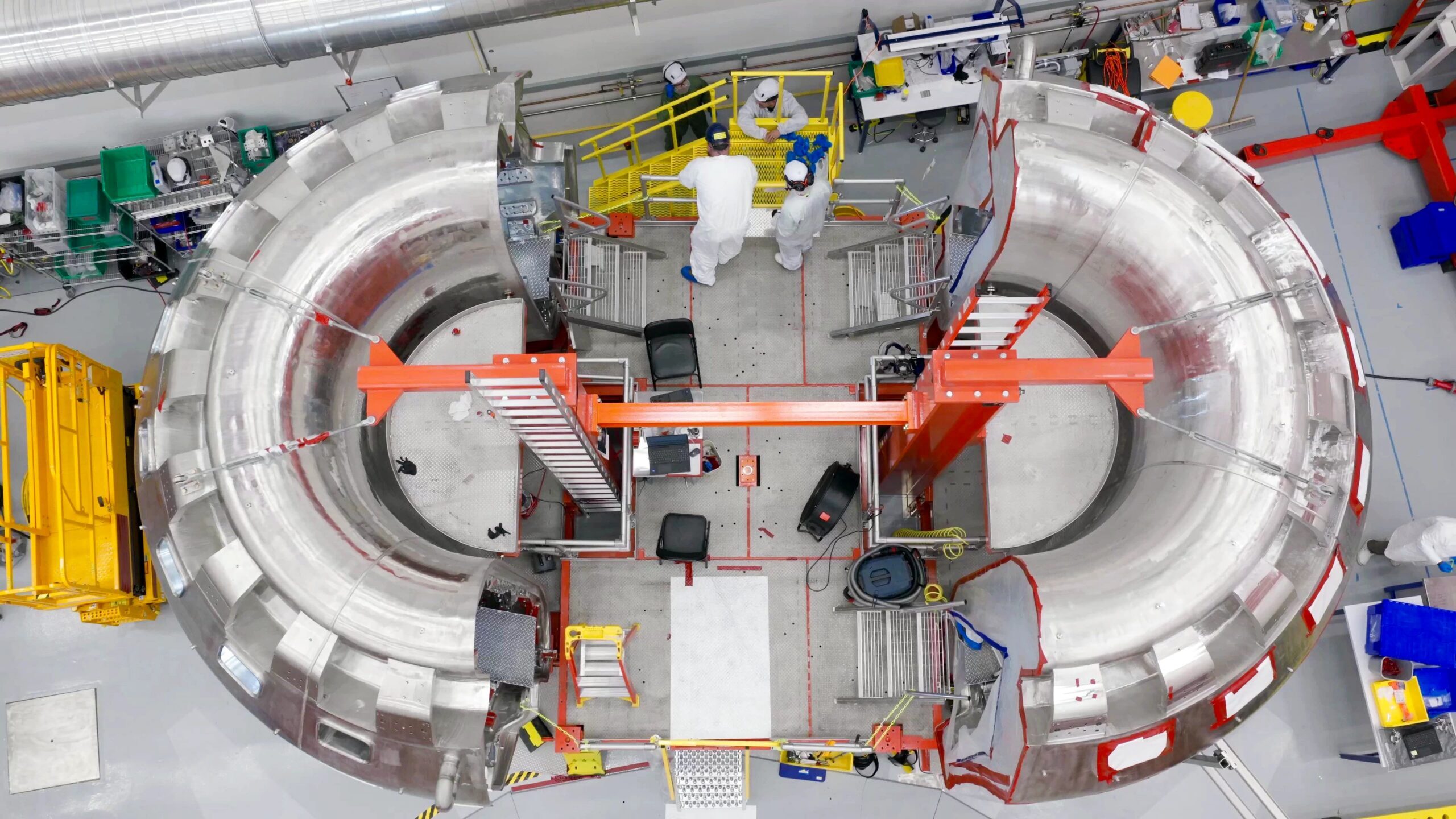
CFS crews are working on the vacuum vessel for the company’s SPARC fusion machine. Also visible: the circular base of the tokamak (center) and a mockup of a D-shaped toroidal field magnet (left).
Building the fusion supply chain
“The vacuum vessel is really significant because it’s a big piece of work that’s been done in concert with one of our suppliers,” Sorbom said.
We’ve developed our own manufacturing abilities with key new technologies like the high-temperature superconducting (HTS) magnets that we make in our magnet factory at our Devens headquarters. Building a supply chain lets CFS complement that in-house capability by drawing on partners that already have the talent and know-how we need for other projects.
Our vacuum vessel uses state-of-the-art technology, but manufacturing partners don’t need expertise in fusion science to build it to our specifications. That means our work in fusion energy can bring in new business to companies looking to expand — for example, the oil and gas industry’s suppliers that are already experts in fabricating sophisticated metal machinery. Today’s work on SPARC could lead to tomorrow’s work on many ARC power plants.
“It’s a big moment for us because we have a big piece of hardware showing up, but it’s also just a really big moment for the industry,” Sorbom said. “It’s a sign of how the supply chain is really maturing.”
SPARC®, ARC™, and Fall Line Fusion Power Station™ are trademarks of Commonwealth Fusion Systems®.