How the Alcator C-Mod tokamak blazed the CFS trail to fusion power
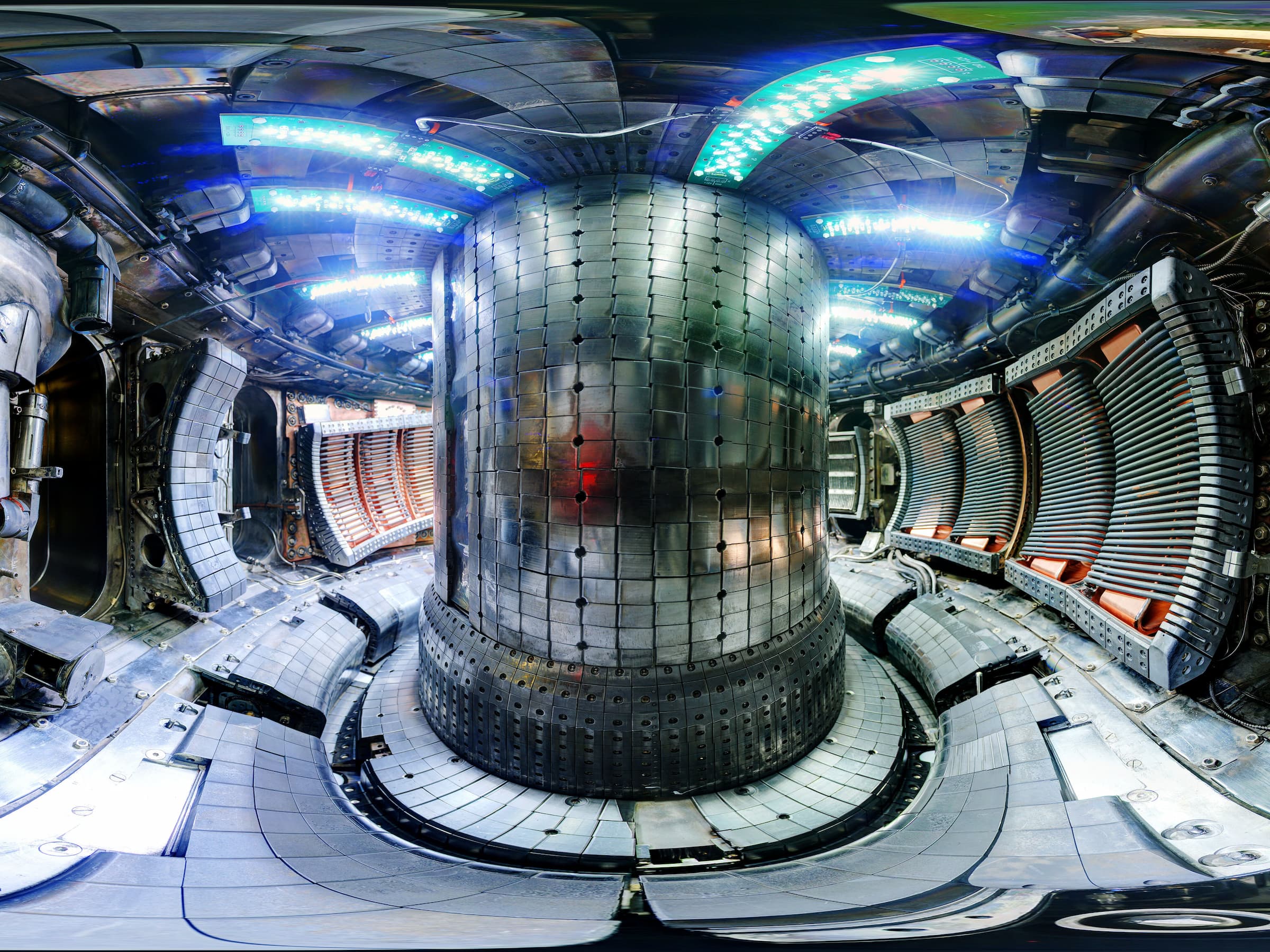
Caption: A panoramic view shows the interior of Alcator C-Mod, a type of donut-shaped fusion machine called a tokamak, at the Massachusetts Institute of Technology’s Plasma Science and Fusion Center. Credit: MIT Plasma Science and Fusion Center
Ten years ago today, a group of physicists at the Massachusetts Institute of Technology pushed a fusion machine called a tokamak farther than any had ever been pushed. In that moment, they also helped chart a path for Commonwealth Fusion Systems (CFS) to bring commercial fusion energy to the power grid.
At that time, CFS hadn’t even been founded, though ideas were swirling. Our co-founders, including Chief Executive Officer Bob Mumgaard and Chief Science Officer Brandon Sorbom, worked on that MIT tokamak, called Alcator C-Mod, at its home at the university’s Plasma Science and Fusion Center.
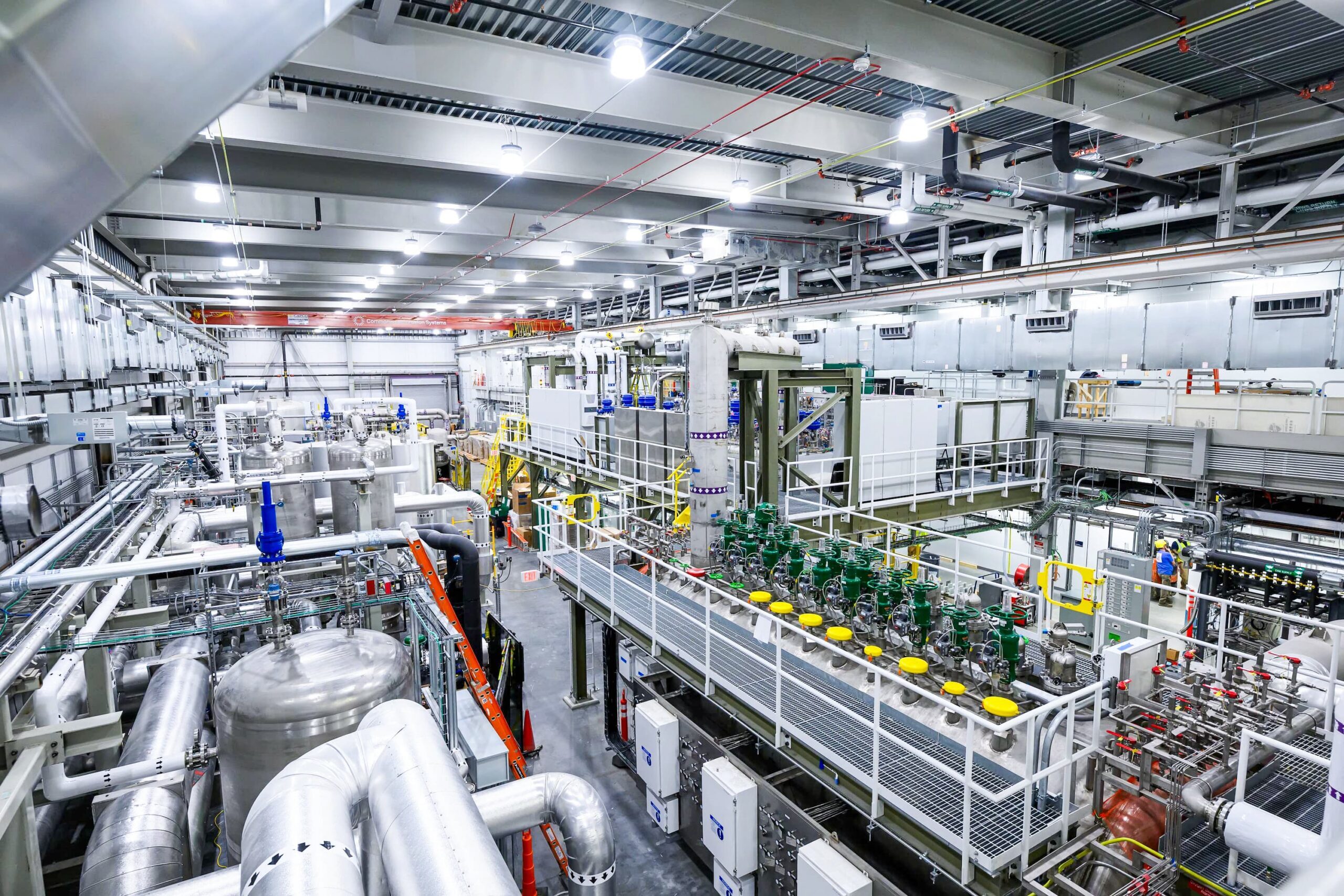
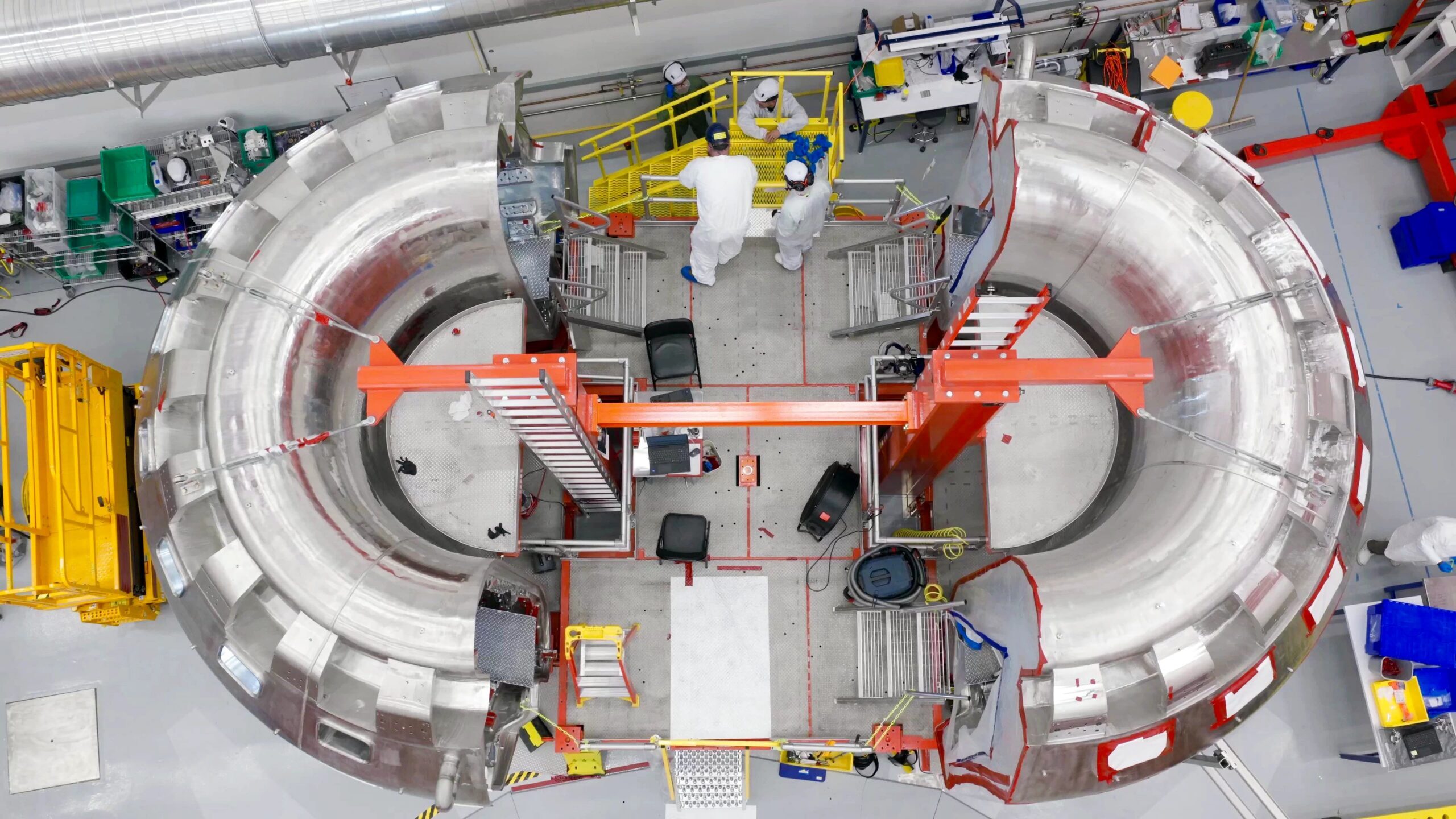
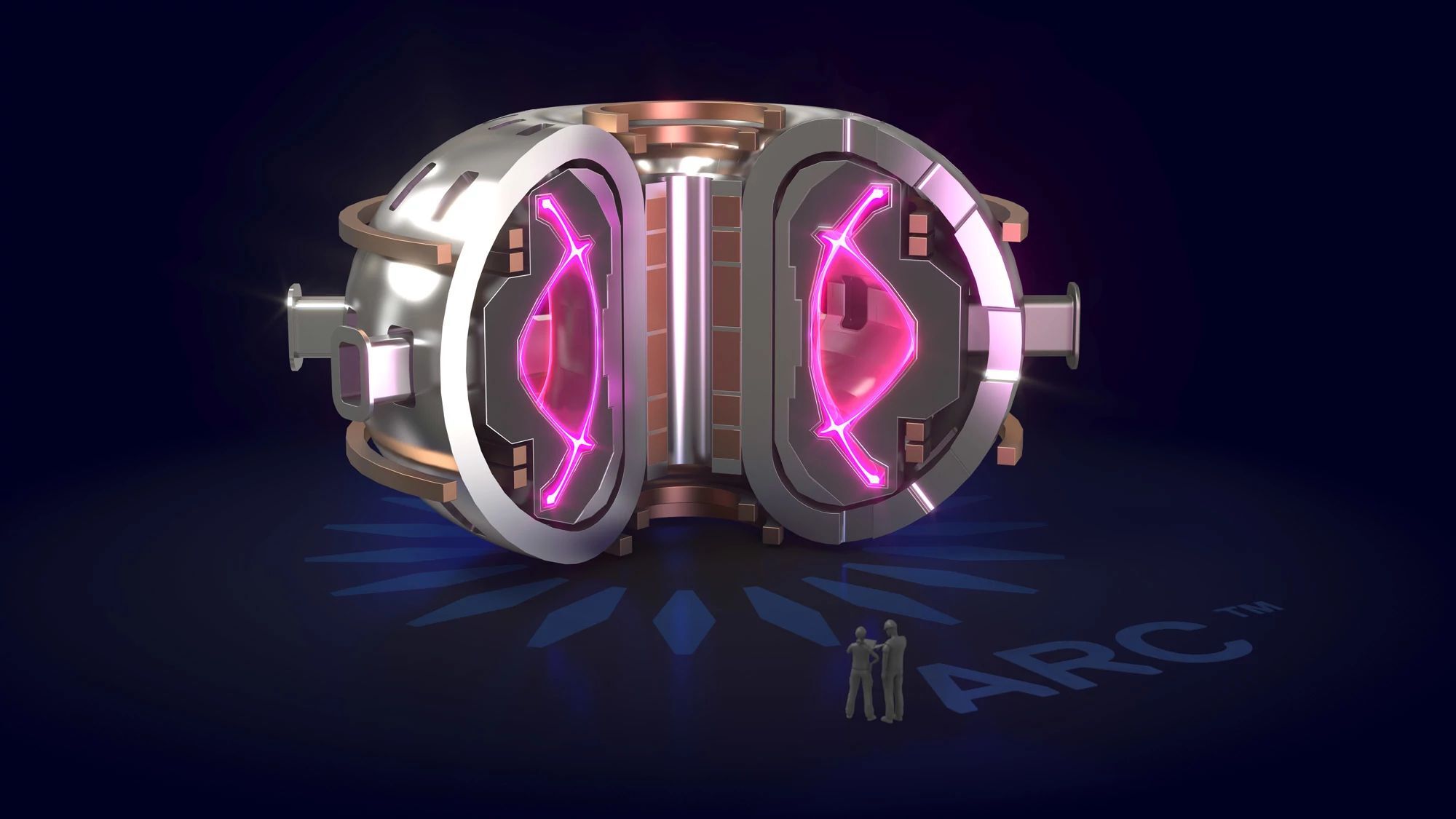
C-Mod was in many ways the progenitor to the SPARC tokamak we’re building right now in Devens, Massachusetts, where we’ll demonstrate Q>1, which means producing net fusion energy. That makes C-Mod the grandparent of the ARC power plant that we’ve begun designing to put fusion power on the electricity grid.
That grandparent did its descendants proud. On its final day in service, researchers used it to show three separate avenues to achieve the high plasma pressure that’s key to high fusion performance. Two did well, and one set a record that stands to this day.
Those final results, enabled by years of learning on C-Mod and by design choices that carry on to our SPARC and ARC machines, demonstrate the strength and flexibility of the CFS approach.
“When it comes to plasma pressure — one of the most important aspects of fusion energy — C-Mod is head and shoulders above other tokamaks,” said Phil Snyder, who helped design and run some of those experiments a decade ago and more recently joined CFS as Vice President of Plasma Physics. “We’re doing the same with SPARC and ARC. That’s the path that enables us to produce so much fusion power in these machines even though they’re so compact.”
Specifically, fusion power increases as the square of plasma pressure. Improving pressure brings a performance boost that translates directly to more economical power generation.
“It’s a really powerful lever,” Snyder said. “The cost of the machine increases very strongly with volume. For every doubling in the pressure, you can go to one quarter of the volume and dramatically reduce the cost.”
C-Mod played a central role in the development of CFS’s approach to fusion energy, but its impact on fusion science, technology, education, and workforce development extended far more broadly over more than two decades of operation. C-Mod made important contributions to fusion areas like disruption management, high-performance plasma regimes, divertor and heat-exhaust physics, plasma-material interactions, and radio-frequency heating and current drive. It also trained generations of plasma physicists and engineers who now contribute across academia, National Laboratories, and industry.
Tokamaks use very strong magnets to confine an extremely hot and energetic cloud of charged particles — the plasma — inside a donut-shaped chamber. Under the intense conditions inside, the light atomic nuclei in this plasma fuse together to form heavier ones, releasing tremendous amounts of energy. In the ARC power plant, we’ll capture that and convert it to electricity.
C-Mod, SPARC, and ARC plants are all examples of compact tokamaks that use very strong magnets that enable high plasma performance. Their high magnetic field lets a tokamak confine its plasma long enough and at high enough density and temperature — the three elements of the ”triple product” that marks successful fusion. And their compactness is key to lowering the machine’s cost and making its electricity more economically.
In addition to showing different ways to achieve that high plasma performance, C-Mod helped prove technology for SPARC in other ways. (You can read about many of the tokamak’s innovations in 20 years of research on the Alcator C-Mod tokamak) by Martin Greenwald et al.). Among them:
“That gives you a lot of confidence you could extrapolate to a machine like SPARC,” said Jerry Hughes, Principal Research Scientist and Deputy Division Head of Magnetic Fusion Experiments at PSFC.
Members of the C-Mod team are now working closely with CFS to combine multiple physics computer models for better SPARC plans and ARC designs. For example, these integrated predictions are central to work to optimize fusion pulses on SPARC so we can progress toward Q>1 as rapidly as possible.
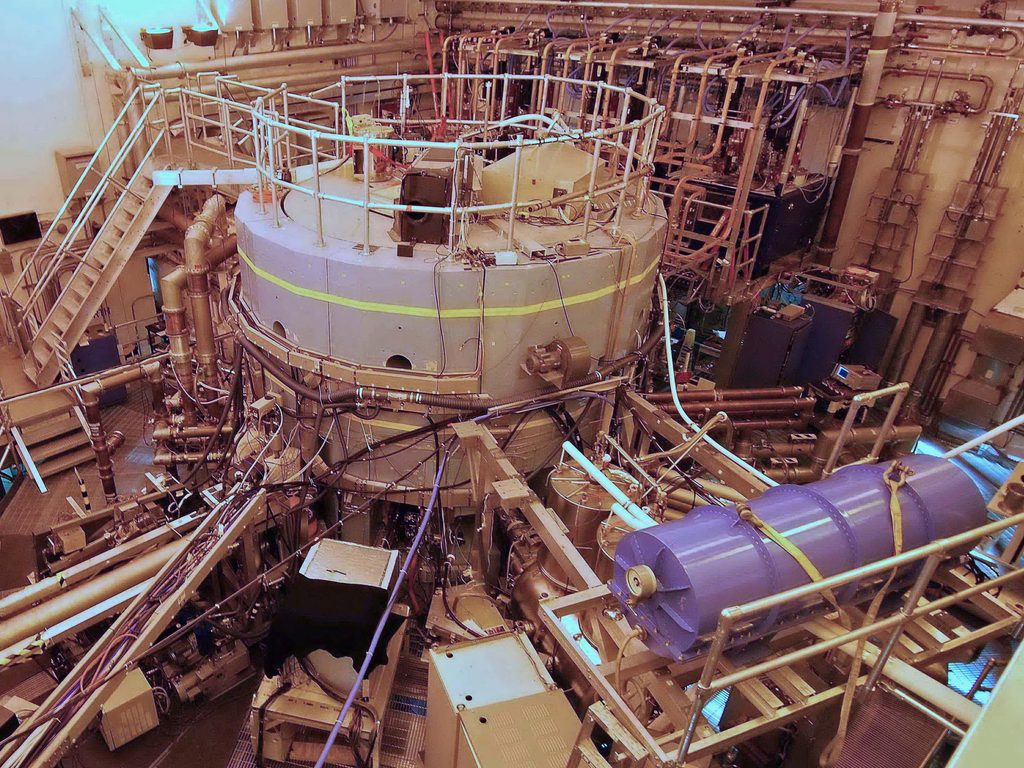
C-Mod’s last day of operation was Sept. 30, 2016, and researchers were determined to make the most of it.
“We were trying to close as many open questions as we could in all the top areas,” Hughes said. “We wanted to do some physics but also make it enjoyable.”
You can read about this final day at C-Mod in MIT publications about the tokamak’s record, the C-Mod legacy, an FAQ about the plasma pressure achievement, and a Reddit ask-me-anything (AMA) Q&A with researchers.
To get the most out of C-Mod’s final day, the researchers ran a competition to break the plasma pressure record. “We formed three teams to see who could get the highest volume-averaged pressure,” Hughes said.
The first team vied to win the plasma pressure crown by pushing to a very high magnetic field — 7.8 tesla, more than 150,000 times stronger than the Earth’s average magnetic field. “It was fairly successful,” Hughes said, but ultimately claimed second place in the competition.
Next came a team that used a somewhat lower magnetic field but higher plasma density. This approach won the day with a plasma pressure of 208 kilopascals (kPa), about 2.05 times the pressure of the Earth’s atmosphere.
Last came a team that pushed for higher plasma temperature, and they ran all the way up to midnight. They didn’t surpass the overall plasma pressure, but they did reach a new record in a key region that can form toward the edge of the plasma called the pedestal.
Most fusion occurs within the core of the plasma, but performance in the core can be boosted by running a tokamak in what’s called H-mode, short for high confinement mode. In H-mode, plasma temperature and pressure increase very rapidly across this pedestal region. That elevates overall performance across the device the way a real-world pedestal might elevate actors on a stage.
In the last campaign that night, C-Mod reached record pedestal pressure of 80 kPa, conditions consistent with an even better setup Snyder had predicted called Super H-mode.
“C-Mod was breaking new ground right up to the very end,” Snyder said.
(You can read more about these efforts in Access to pedestal pressure relevant to burning plasmas on the high magnetic field tokamak Alcator C-Mod by Hughes et al. and High fusion performance in Super H-mode experiments on Alcator C-Mod and DIII-D by Snyder et al.)
Along with other capabilities at MIT’s PSFC, C-Mod helped give a lot of CFS employees and collaborators real-world experience with tokamaks. Many of them were there for that final research push on C-Mod’s final day 10 years ago.
“It really was celebratory. It was full of people and really packed until midnight,” Hughes said. “It was a great time despite the fact that we knew we were not going to run it again.”