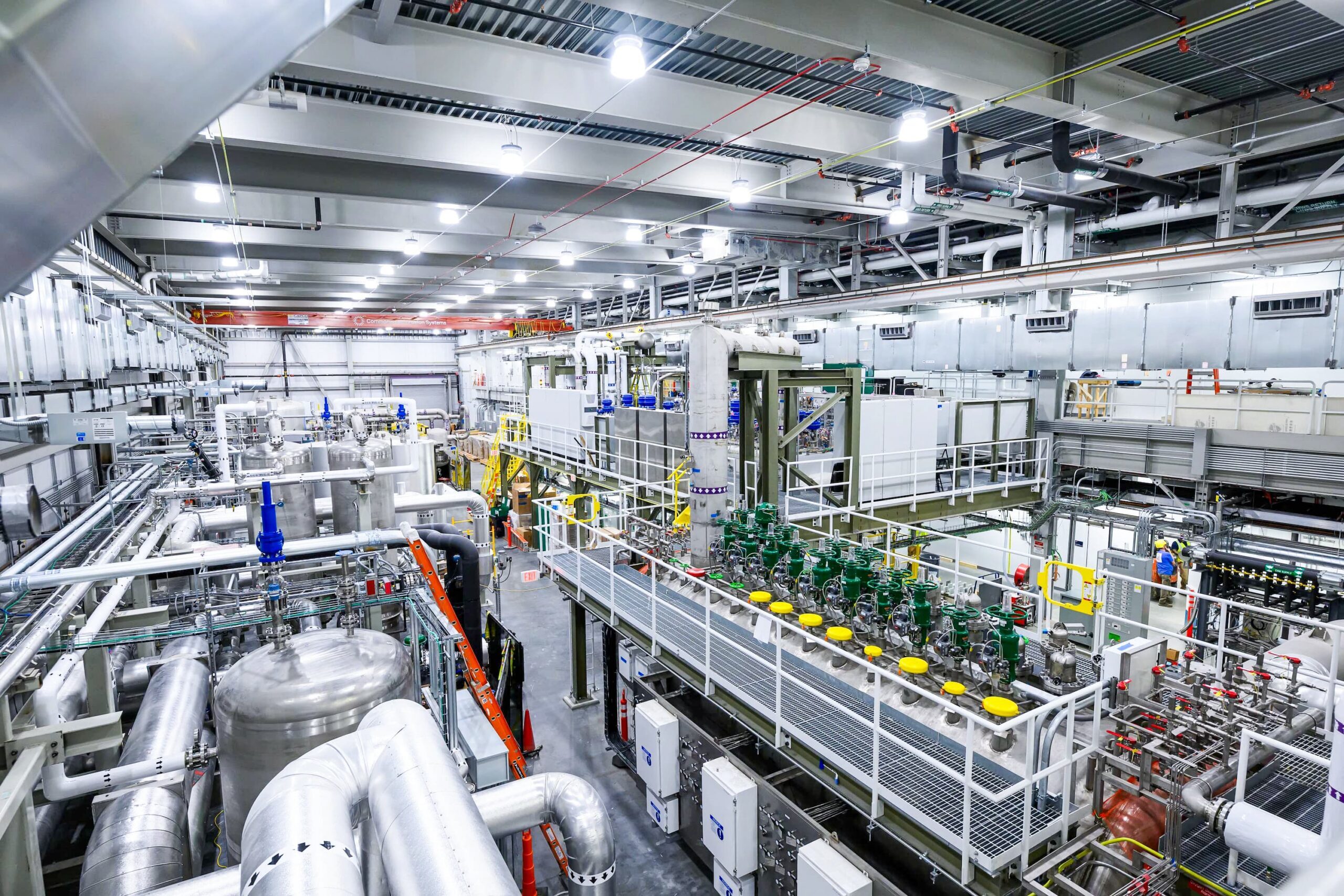
CFS begins preparing a home for our 100 million degree fusion plasma
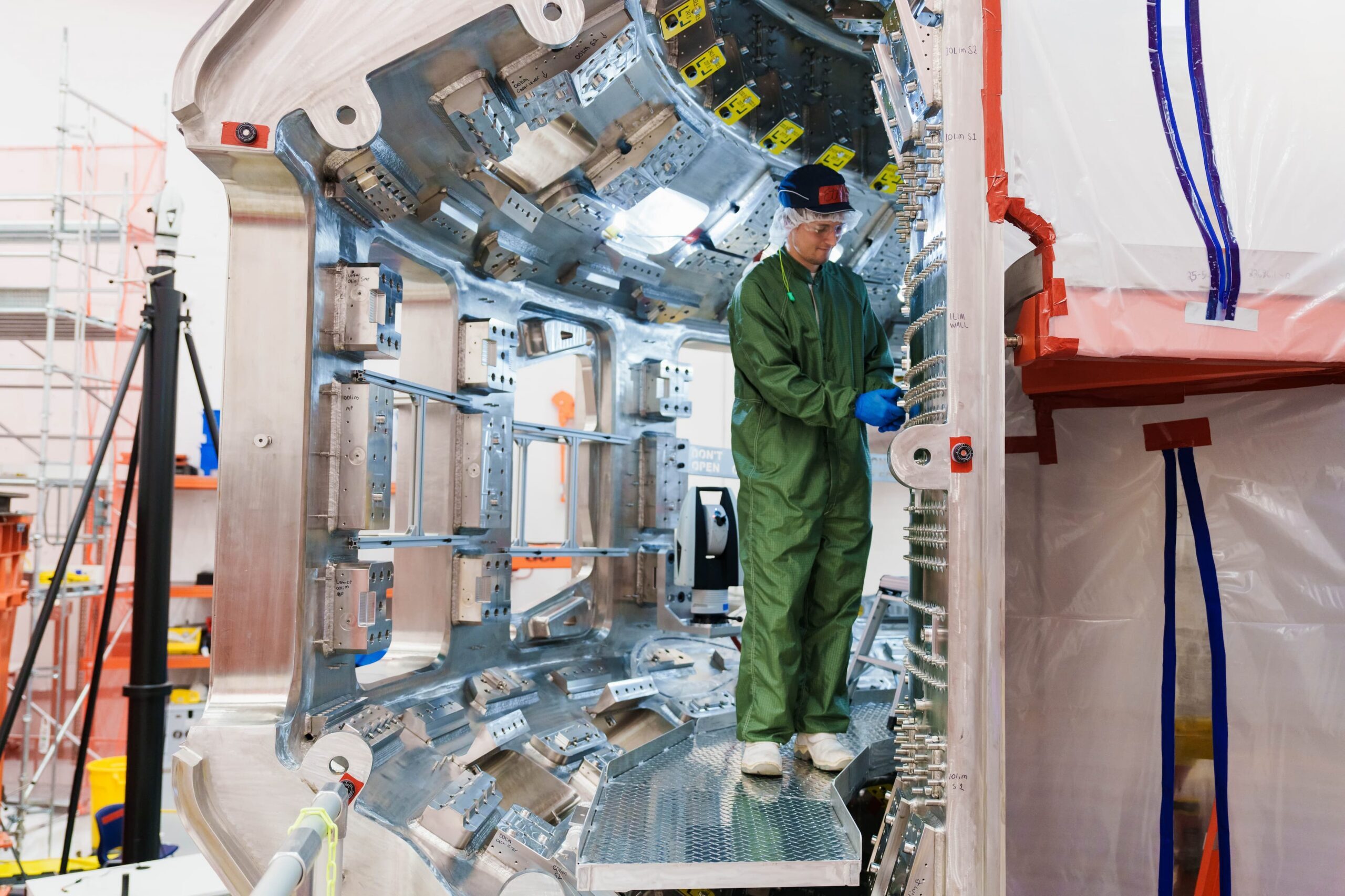
Here at Commonwealth Fusion Systems (CFS), we’ve begun work to make a cozy new home for our 100 million degree plasma.
The second half of the vacuum vessel for our SPARC demonstration fusion machine has arrived, allowing us to begin equipping it and its counterpart to host the most intense conditions in the solar system. We’ve now begun the hard work of fitting out the vacuum vessel halves for use by measuring them carefully, using those measurements to precisely make the components that’ll face the fierce plasma temperatures, and adding the diagnostic equipment to control and understand SPARC.
Our fusion approach requires cutting-edge electromagnets and advanced plasma physics, but equally critical is all the manufacturing and assembly work that turns our designs and parts into a working machine.
“This is the steady effort every fusion device maker has to do to build a machine bolt by bolt from its foundations,” says CFS Chief Science Officer and Co-founder Brandon Sorbom. “It’s awe-inspiring to stand inside the vacuum vessel, talking to the members of our team working in a place that’ll be hotter than the center of the sun not long from now.”
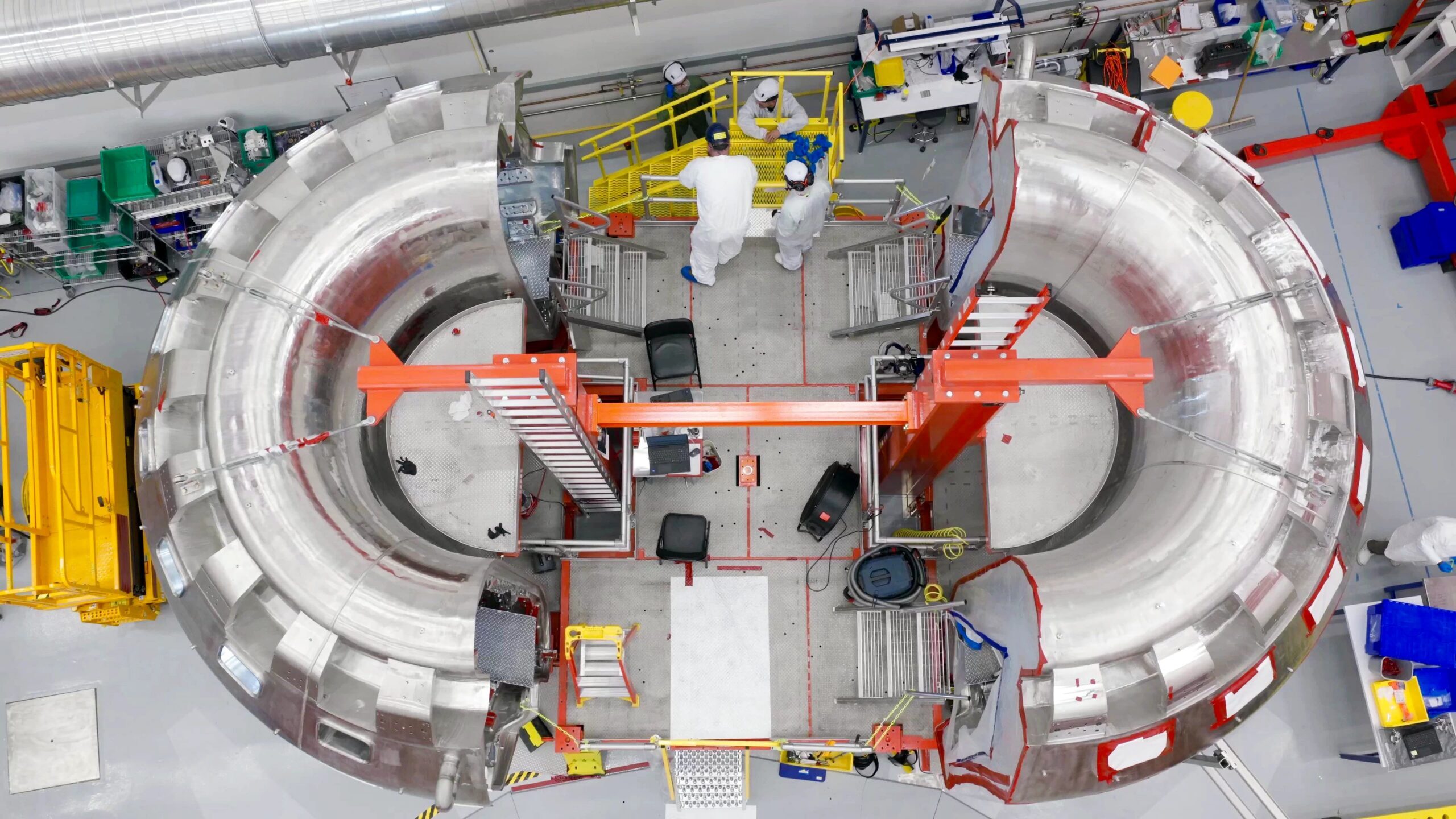
The vacuum vessel is the 96-ton, donut-shaped steel chamber at the heart of SPARC. Once we’ve fully equipped the two halves, welded them together, and begun SPARC operations, our vacuum pumps will make it as airless as outer space. When SPARC operations begin in 2027, we’ll puff in a bit of fusion fuel and use radio waves to heat it into an energetic cloud of particles called a plasma. We’ll heat that plasma to 100 million degrees Celsius, holding it in place with powerful magnets so it fuses and releases more energy from fusion than it took to heat it. This net fusion energy milestone, called Q>1 in scientific circles, is a crucial step to prove our fusion energy approach works.
With SPARC’s cryostat base already installed, and two of our D-shaped toroidal field (TF) magnets now in place — more to come soon — SPARC is nearly 75% complete and is starting to look like an actual tokamak.
The vacuum vessel combines strength, durability, and precision to serve several critical functions:
Our team is already deep in the work of prepping each half for assembly, furnishing their interiors with the components necessary for SPARC’s operation. Here’s a look at that effort.
Eventually, each vacuum vessel half will be housed within a set of nine D-shaped toroidal field magnets arranged in a semicircular array, then each of those assemblies will be mated together. But before any of that can happen, both halves of the vessel need to be inspected, cleaned, measured, and outfitted with plasma-facing components and diagnostic systems.
The measurement work, called metrology, confirms how well that real-life SPARC matches its digital design. That’s necessary to meet SPARC’s precision manufacturing needs.
The next step will be to install SPARC’s diagnostic systems — lengths of cabling and sensors comprising the nervous system of the machine. That’ll let us assess what’s happening inside SPARC as it runs and then adjust it to improve performance. Our team is already performing test installations with these components, which include mineral-insulated cabling that wends its way along the vacuum vessel’s interior walls and diagnostic sensors placed within some of SPARC’s ports — those large rectangular holes in the vacuum vessel’s exterior walls.
After that, our team will begin to install plasma-facing components. Their job is to protect the diagnostic system and the rest of the machine from the plasma. Each piece is placed with 200-micron precision — about the width of two human hairs — and is expressly designed for its location within the tokamak. We make the plasma-facing portion of these components out of tungsten, an extremely dense and durable metal that also boasts the highest melting point among metals, and tungsten alloys.
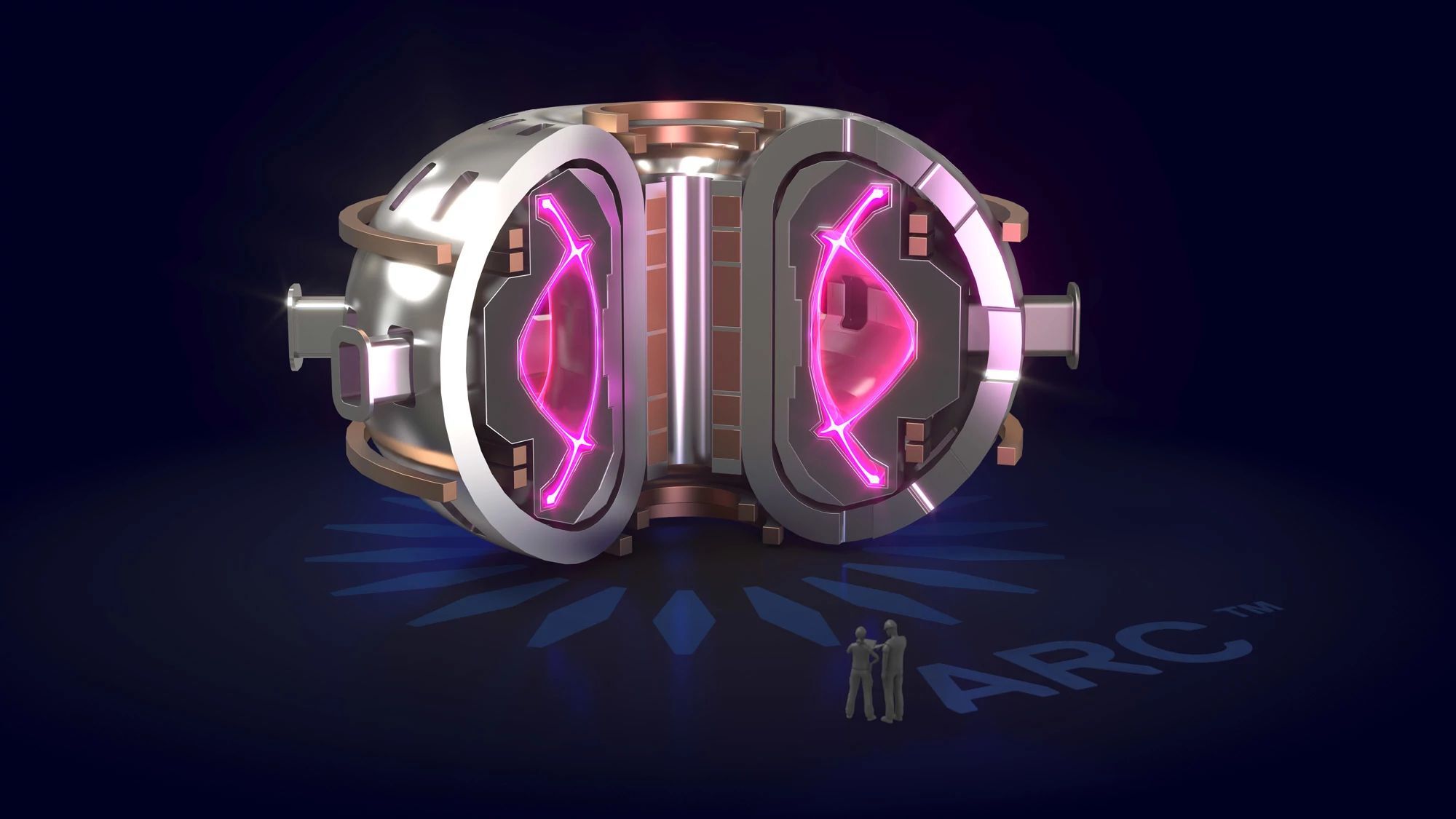
This vacuum vessel work is part of a bigger, highly coordinated dance to assemble SPARC inside tokamak hall. And that work is part of our ultimate goal which is to commercialize fusion energy. SPARC paves the way for our first power plant design, called ARC. After SPARC demonstrates Q>1, we’ll turn our attention to its next job: using it to fine-tune the design and operations of the ARC plant.
Says Sorbom, “Ultimately, the goal of SPARC is to get to Q>1 as fast as we can so that we can get to the next step — to build ARC, our fusion power plant.”
Watch the video to learn more about:
SPARC®, ARC™, and Fall Line Fusion Power Station™ are trademarks of Commonwealth Fusion Systems®.