With AI alliance, Google DeepMind and CFS take fusion to the next level
Fusion energy holds the promise of clean, affordable electricity that can help power the next phase of our civilization’s development, a tool to bring many other advancements within reach. And AI already is on its way to becoming a similarly enabling technology that touches every corner of our lives.
That’s why we at Commonwealth Fusion Systems (CFS) are so enthusiastic about a partnership with Google DeepMind, a world-class artificial intelligence team whose cutting-edge research has delivered dramatic results across a number of areas in science and technology.
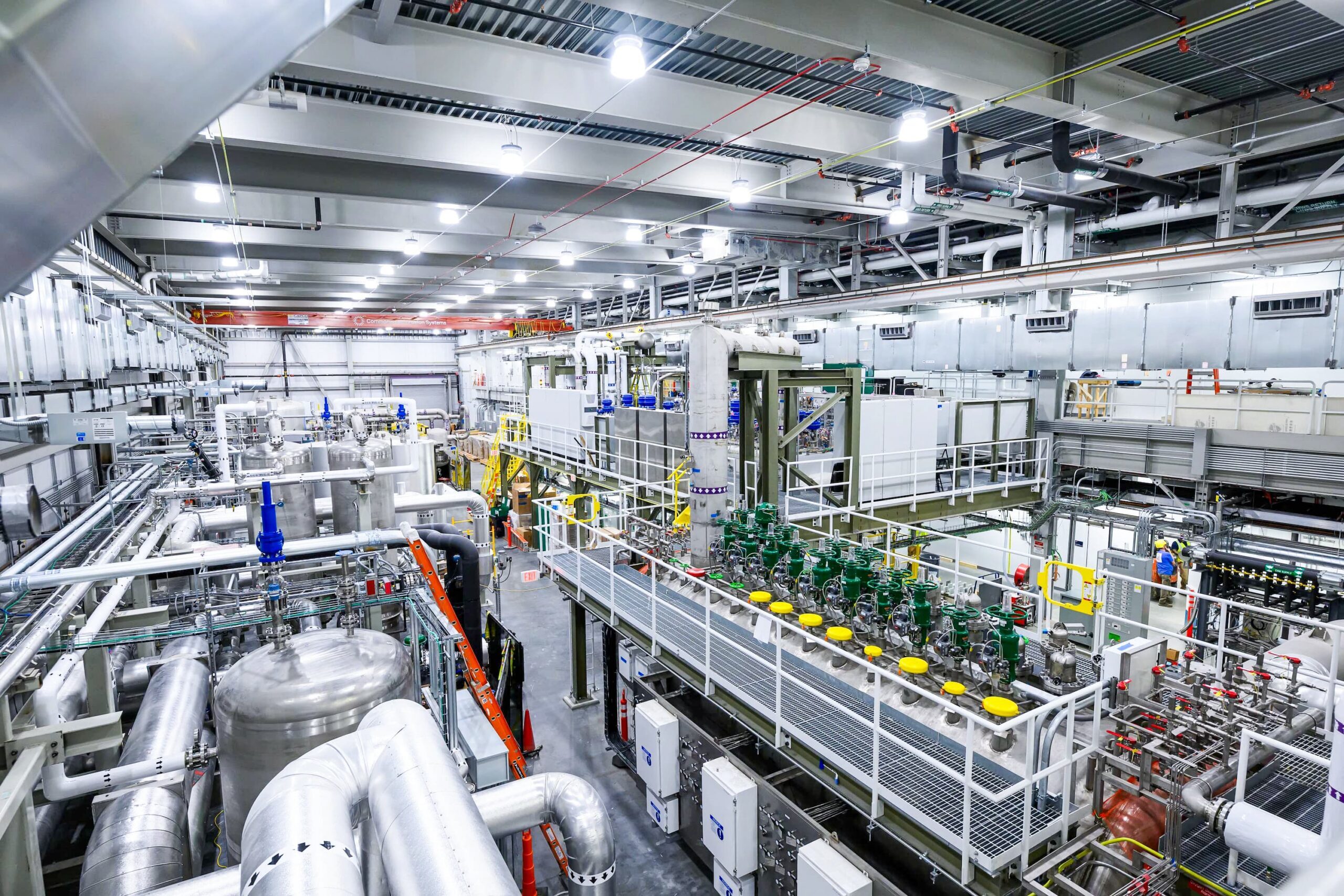
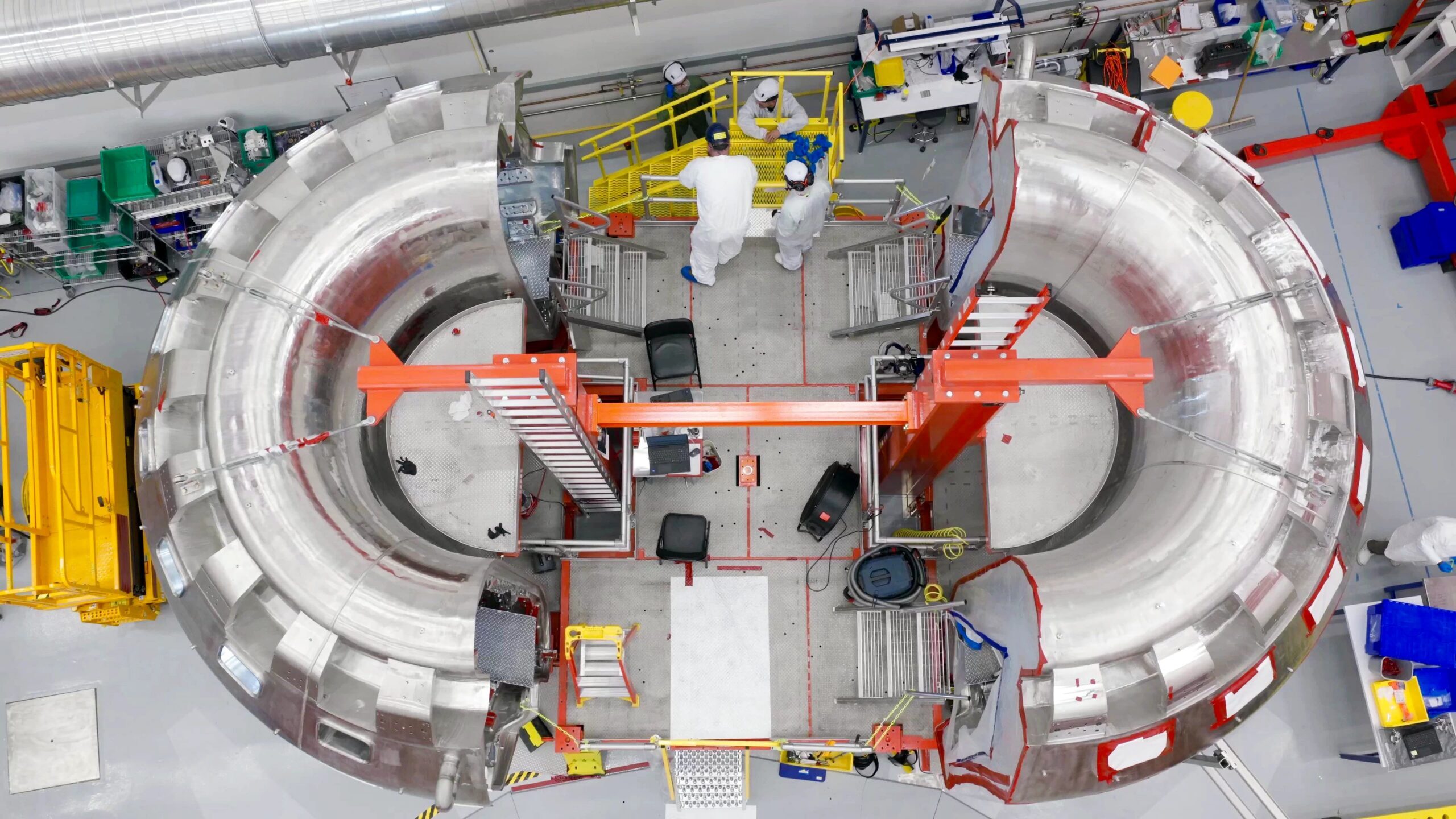
A foundation of our collaboration is work on Google DeepMind’s TORAX software, an open-source tool that lets researchers join multiple AI models to simulate the physics of plasma, the superhot cloud of charged particles that form fusion’s fuel. Then putting TORAX to work, Google DeepMind and CFS will explore ways to improve how we’ll run our SPARC fusion machine at our headquarters in Devens, Massachusetts.
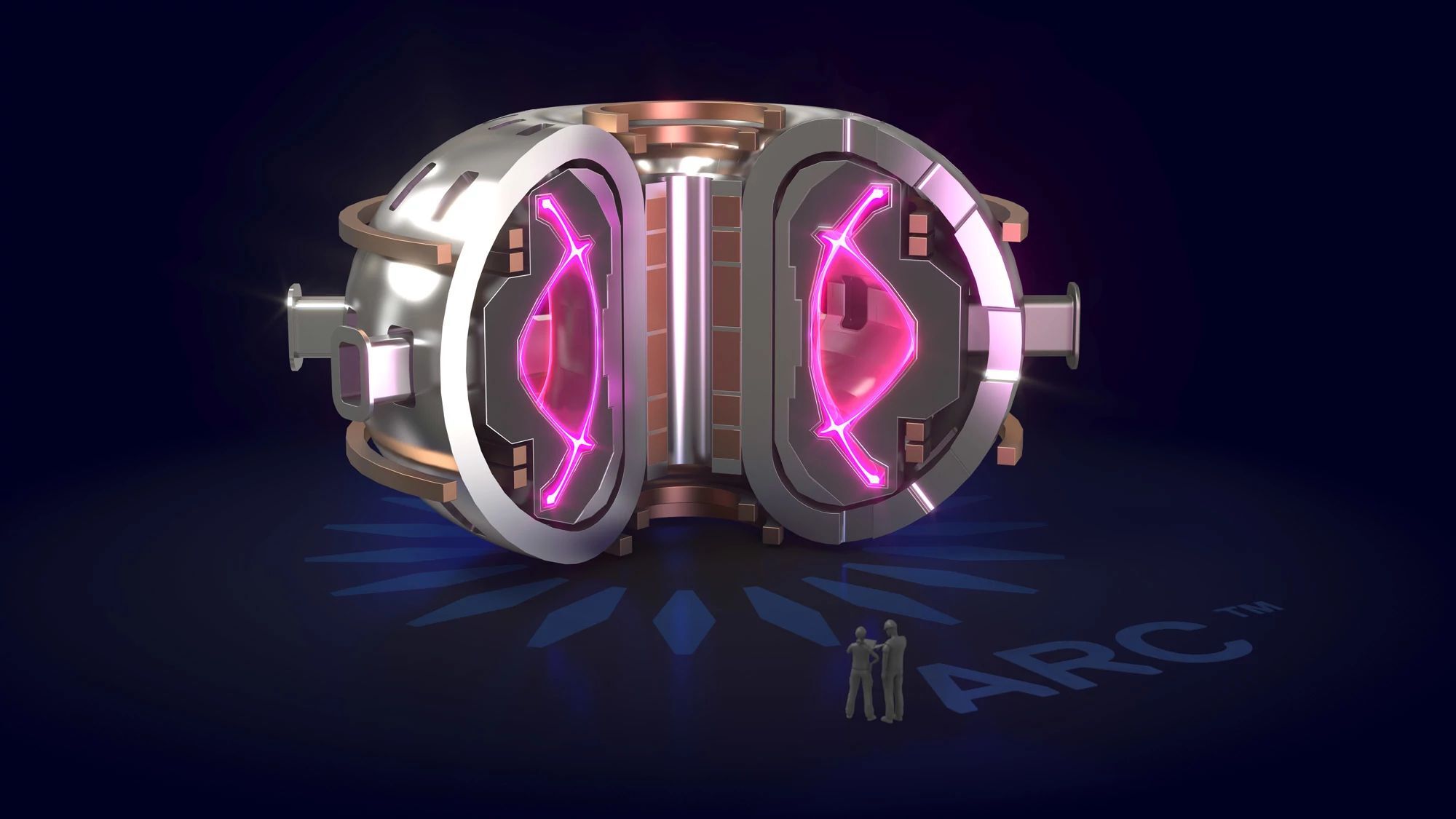
It’s a big deal. AI tools carry serious potential to accelerate learning on SPARC and then to push toward making our ARC fusion power plants more efficient and economical. And that acceleration could dramatically boost fusion energy’s positive impact on the world.
CFS and Google DeepMind share an open approach to innovation that encourages work like developing TORAX and exploring AI — publishing peer-reviewed research and building open-source software, for example. That approach can help the entire fusion energy industry. You can read more about this collaboration on this blog post from the Google DeepMind team.
In addition, CFS and Google have other ties. Google deepened its investment in CFS earlier this year and agreed to purchase 200 megawatts of fusion power from our first ARC power plant in the early 2030s.
Google DeepMind captured the world’s attention with AlphaGo, the AI model that triumphed in the complex game of Go. Its Nobel Prize-winning AlphaFold leapfrogged earlier approaches to solving the famously hard protein folding problem that’s key to genetic and medical research. AlphaEvolve creates and tests new algorithms, an approach that improved Google data center efficiency and sped up its computer chip design. And Google DeepMind develops Google’s Gemini and other generative AI tools that millions of people use daily.
AI and machine learning (ML) technology, inspired by some of the pattern recognition and processing methods used by human brains, are transforming computing. Google DeepMind uses several approaches. One, called reinforcement learning, tasks an AI to explore many different solutions to a problem then rewards the AI for progress. That approach can gradually steer the AI model in the right direction, working well for AlphaGo and Google DeepMind systems that played Atari videogames.
Reinforcement learning can apply to fusion, too. Through the CFS collaboration, Google DeepMind’s AI is able to explore many different options for operating SPARC and to identify promising configurations. The machine has a lot of controls — fueling, radio-frequency heating, and electrical currents pumped into its electromagnets, for example.
The AI can help tune these inputs to the machine to maximize the device performance while maintaining margin to device limits.
This work is part of the advance planning for running SPARC, akin to plotting out the navigational details of a cross-country flight to account for details like fuel use, travel time, and weather.
Another collaboration avenue is more like actually flying the plane.
Here, AI could be used as a component within the control system running SPARC. It’s like Google DeepMind’s videogame work: train the system how to operate the tokamak’s control knobs based on various scenarios, give it a high-level goal like maximum fusion power within the limits of the machine, then let it guide SPARC’s control system.
Google DeepMind has been involved in serious research in this domain. In one project, researchers used AI’s reinforcement learning approach to figure out magnet controls to operate the research machine, the Tokamak à Configuration Variable (TCV) at the Swiss Plasma Center at EPFL. The researchers also used the technology to explore new plasma configurations.
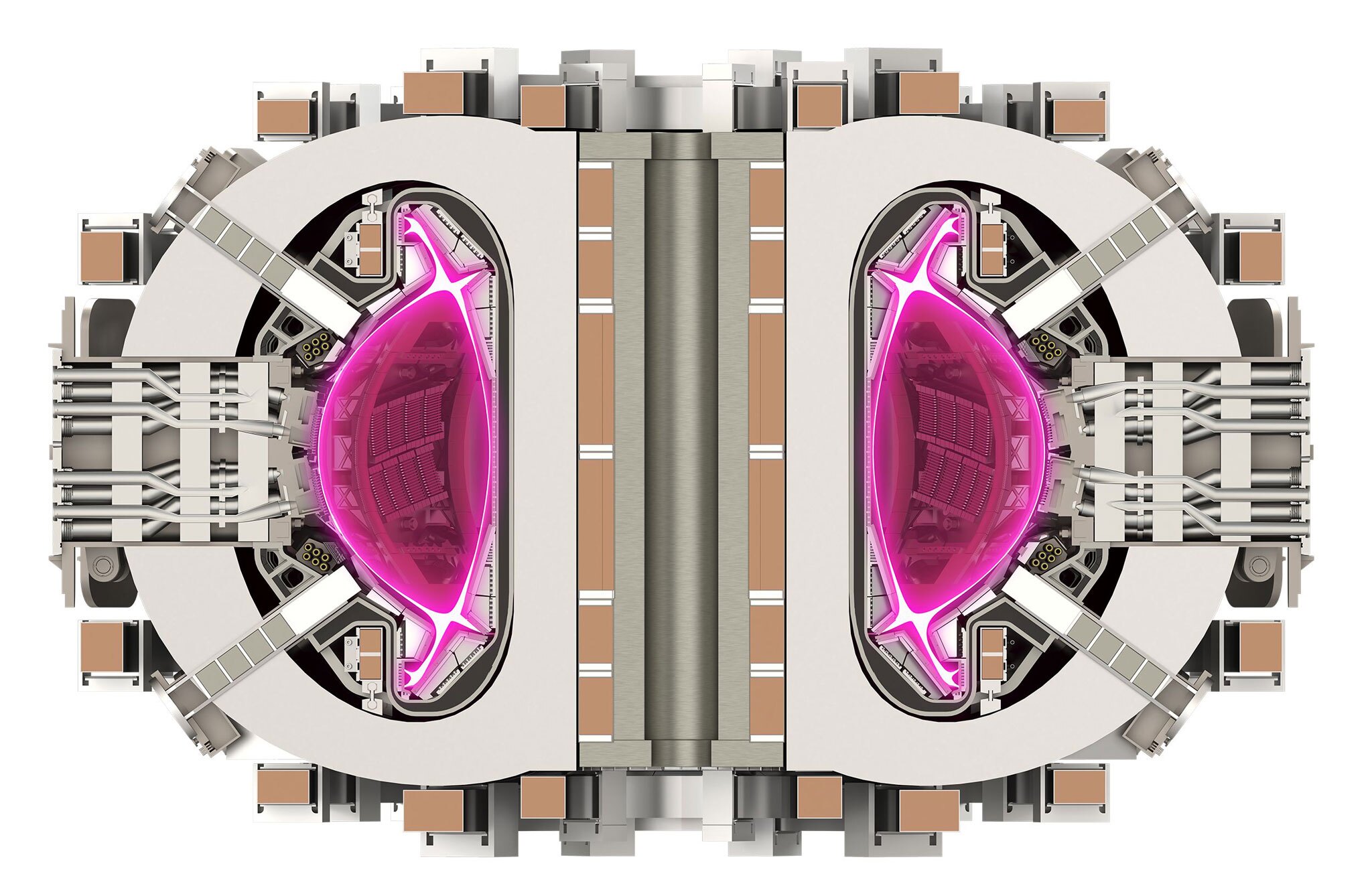
Google DeepMind’s AI technology can tackle an aspect of SPARC’s heat management. When the tokamak is running, the plasma produces heat exhaust that must be controlled as it encounters the machine’s walls in a region called the divertor. Controlling the plasma shape can in effect steer this heat to keep components sufficiently cool while maximizing performance. AI could explore different options computationally to find the optimal methods and adapt to new information we gain from running SPARC.
Those research directions show that reinforcement learning supports a vision of an AI control system that could contribute to SPARC operations.
Google DeepMind’s TORAX, developed by experts at Google DeepMind including staff with decades of plasma physics experience, is a key enabling technology. Its framework can link together multiple computing engines, including AI tools, into a single, fast, modern computing engine that greatly accelerates the pace of discovery.
Fusion, the power of the sun, takes place in a highly energetic cloud of charged particles called a plasma. It combines lighter elements into heavier ones and releases copious amounts of energy in the process. But these charged particles — atomic nuclei and electrons stripped away by the plasma’s high temperature — increase the complexity of simulating the dynamics of a plasma within strong electric and magnetic fields.
CFS is on the fastest path to commercial fusion energy in part because we’re able to build on a physics understanding of tokamaks developed over decades of research. That research includes computer simulations validated by real-world tokamak operation, a capability that gives CFS confidence in our designs.
But before TORAX, those simulations required a patchwork of software projects and programming languages. Now we have something better thanks to TORAX and its use of Google numerical computation software called JAX that can integrate results from multiple AI models. Using JAX, TORAX lets us distill plasma calculations into a blazingly fast computation that makes it easier to combine AI models built from that patchwork of projects. And TORAX can run that software on processors with the latest hardware acceleration features.
TORAX came on the scene in 2024. The worldwide fusion community quickly recognized the potential and various groups have begun contributing to its development and validation. CFS is investing in TORAX development, too.
SPARC isn’t your parents’ tokamak. Its key innovation, high-temperature superconductors that create much stronger magnetic fields, means tokamaks that are more compact and therefore more economical. But it’s not the only thing changing in fusion technology.
CFS has already benefited from sophisticated modeling to design SPARC. Now AI could add another layer of computing power — and another avenue to take fusion energy to the next level.
SPARC®, ARC™, and Fall Line Fusion Power Station™ are trademarks of Commonwealth Fusion Systems®.