Fifth step on the path to fusion energy: Net electricity
We’re now in the home stretch for my series of posts on the six milestones on the path to commercial fusion energy. It’s time to write about the fifth: generating net electricity. That means producing, collecting, and controlling enough energy that it could be sold out from the plant and onto the power grid.
To reach the previous step, the net fusion energy milestone called Q>1, your fusion machine has to start looking more like a fusion power plant instead of a research effort. To reach the fifth step, you have to show it can actually convert fusion power into the electricity that a power plant needs to keep itself going, and have some left so other people benefit from your power plant.
In short, reaching this milestone shows you’ve got a useful product, not just a project.
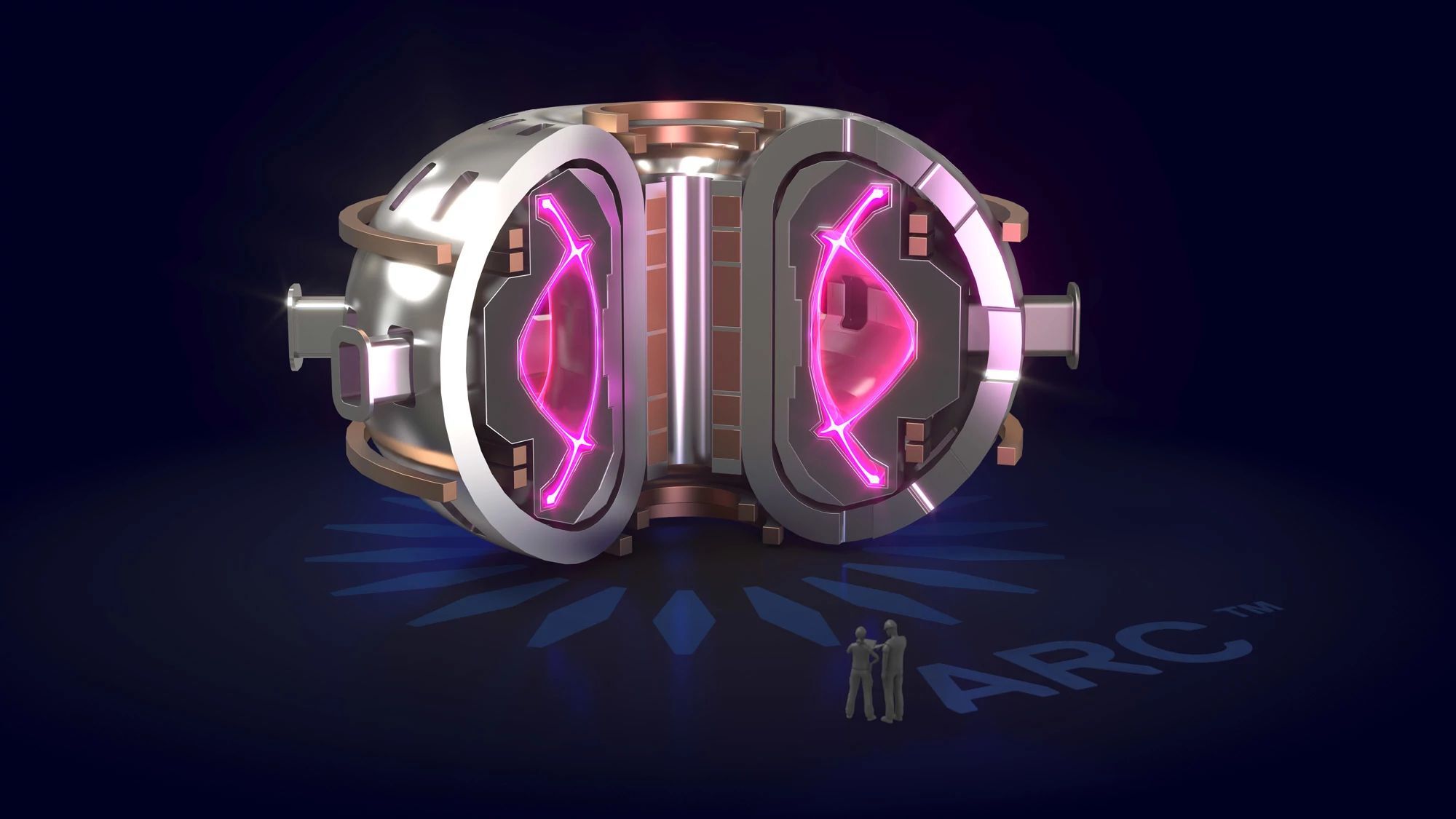
Only one fusion machine has reached the fourth milestone, and none at all have reached the fifth. Here at Commonwealth Fusion Systems (CFS), we’re aiming to do it with our ARC power plant, a machine that we’ve begun designing and that we plan to connect to the grid in Chesterfield County, Virginia.
Each of these six milestones is a moment to celebrate, first as an achievement in science and engineering but also as steps on the path to fusion energy. Fusion power plants hold the potential to bring clean, secure, safe, reliable power to the grid during a time when humanity really needs it.
Before I dig into the fifth milestone, here’s a refresher on the milestone framework. It’s designed to be a relatively simple guide that investors, journalists, policymakers, and the general public can use to separate true fusion progress from mere marketing hype. I encourage fusion companies to publish and celebrate their progress on these milestones, with the ultimate goal of building trust in our industry.
These are the previous four steps I’ve described in detail:
Fusion machines generate power, but it also takes power to run them. Milestone five is about having enough left over after power is consumed by things like:
All of that is power that you’d otherwise be able to sell on the grid. If your fusion machine uses too much of its power to run, you can’t overcome the losses, even if the energy gain from the fusion reaction itself is very high. If the rest of the engineering subsystems are energy hogs, you’ll always need to buy energy to run your plant instead of selling it.
The fusion reaction at sufficiently high gain (producing a lot more power from fusion than the plasma heating requires) is the hard part of the fusion science. It’s the challenge that people have been working on for a long time to understand. But capturing the resulting heat and converting it to electricity looks the same as in the ordinary energy industry, like coal plants or nuclear fission plants. Those systems take that heat and convert it to electricity using something like a steam turbine.1
Some of that generated electricity is then siphoned off and used for all the power plant jobs like heating the plasma, running the pumps, running the magnets, running the lasers. That situation is similar to all existing power plants that use some level of “recirculating power” to run their internal systems — coal crushers, feedwater pumps, chimney blowers, fuel injectors, etc.2
Depending on engineering choices, these systems can be efficient or inefficient, and every watt of electricity they consume is a watt the power plant can’t sell. As a result, innovations here are important to power plant economics and can lessen the requirements on the plasma. Many of these innovations can be tested out completely separately from the plasma physics itself, too. For example, test stands can help develop radio frequency generators, lasers, gyrotrons, blankets, and other fusion equipment. People are increasing work in this area of engineering as they anticipate plasmas that can make enough fusion power at sufficiently high gain to warrant it.
Once all the subsystems take their share of the electricity, the residual is the amount of electricity the plant can sell — the net electricity. An important note is warranted here: the word “net” is doing all the work in this milestone. Simply continually putting in a bunch of electricity into a fusion machine, creating some fusion reactions, capturing the energy, then converting it back to electricity is very different if it makes much less than it consumes! That would be like a ponzi scheme: continually taking money in but not making enough to pay back those that already put money in. Everyone should take care to understand the power flows in the systems and use language carefully. Most people hearing the words “fusion electricity” will presume that refers to a fusion machine making net electricity, not consuming it. To draw a parallel, hearing about solar energy, nuclear energy, or fossil energy doesn’t conjure up images of plants that are consuming more than they make!3
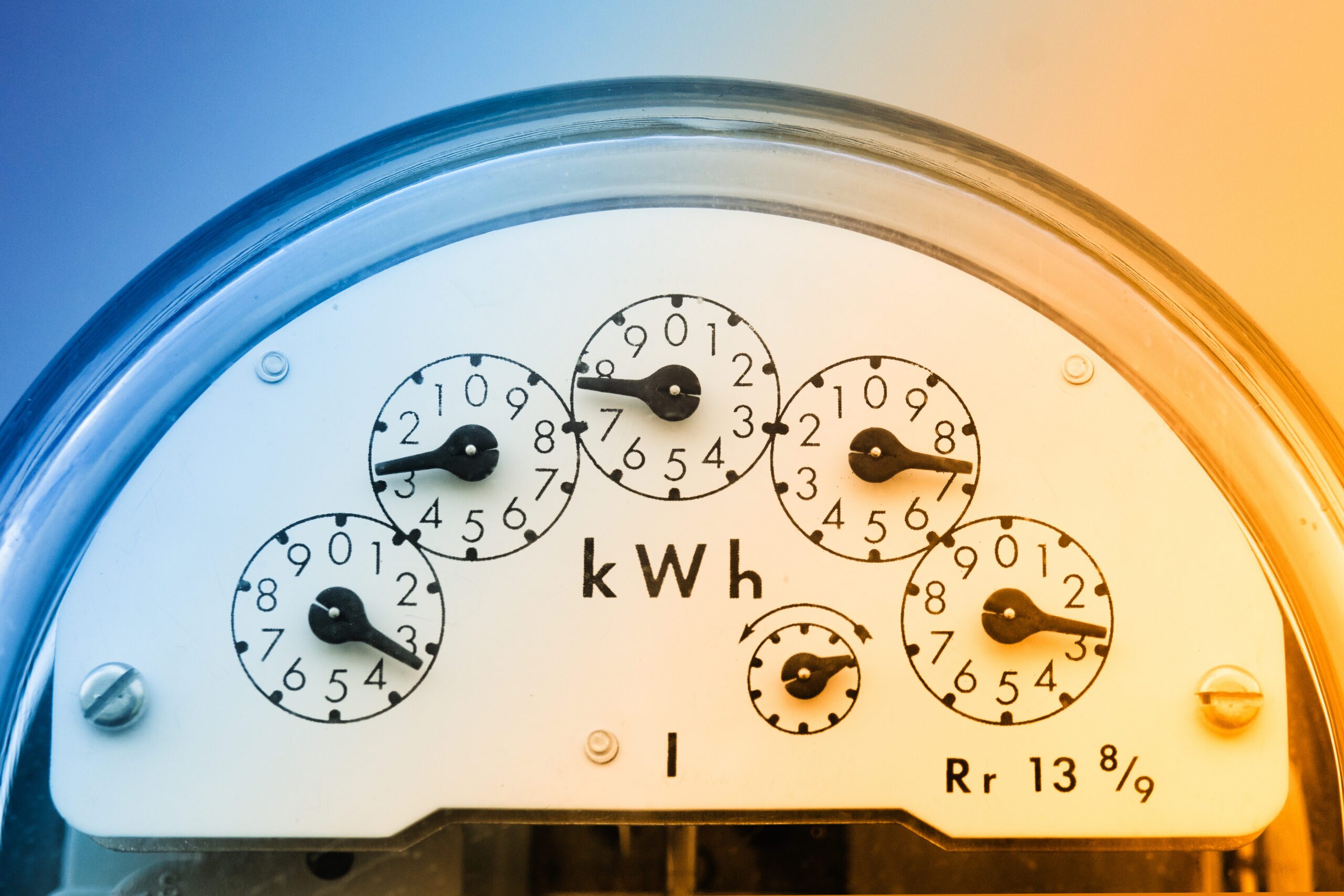
Measuring net electricity is in many ways simpler than measuring your plasma’s performance. An electricity meter tracks power usage at the plant boundary, something humans have done for decades already. You have to track electricity long enough to account for varying electrical loads that your machine might experience.4
Technically, any net power level over zero counts as net electricity, but you want a healthy, convincing amount. The National Academy of Sciences’ Bringing Fusion to the U.S. Grid report defines a fusion pilot plant as one capable of producing 50 megawatts of net electricity, and to do so over a period of 3 hours.
If you can generate net electricity, it means you have an integrated fusion system, with unified elements working together at necessary efficiency levels to be able to sell some power. Importantly, all that integration requires coordination across many subsystems that have to work for your specific design of a power plant, not just a plasma architecture. Thus, reaching the fifth milestone is a company-level milestone. You alone get to claim it — just because you did it doesn’t mean the same plasma physics elsewhere will result in net electricity, because there are many choices involved in your plant.
Net electricity from fusion is the basis for a business. It means fusion has made something that the world already buys that can be priced, measured, and sold.5
Back with milestone 4, I talked about how when measuring Q we look at the energy from the fusion reactions divided by the energy to heat the plasma. It’s a ratio, because the plasma is an energy amplifier. To calculate Q, we measure the energy inputs and outputs at the boundary of the plasma itself — because fundamentally what you’re doing is showing you have the ability to get what you need from your plasma. That’s the hardest challenge of fusion power plants, with the newest science and technology.
With milestone 5, the measurement is no longer a ratio, it’s a difference. Because ultimately the world doesn’t care what the ratio in your plant is, they care about how much energy you have to sell.6 For net electricity, where the bill comes due for all those plant-level factors, we now measure at the boundary of the plant.
This milestone is about the whole plant, but the plasma is still key. Your plasma-handling abilities have an enormous bearing on whether you can generate net electricity. Q>1 is a monumental achievement, but Q>1 doesn’t automatically offer enough of a surplus to outweigh all the energy loads in your plant. If things are very inefficient then you’d need a much higher Q. For instance if you used lasers that are 1% efficient turning electricity into plasma heat, you’d need Q>100 just to power those lasers even if everything else was perfectly efficient. And conversely, if almost all your systems were perfectly efficient, you could produce net electricity at Q<1 since even the heating you put into the plasma could be recovered nearly perfectly in addition to the fusion power itself. So a lot goes into what exactly the Q is needed to get to net-electric power plants. That’s why you’ll often see back-of-the-envelope calculations calling for Q=10 for many fusion power plants. The higher the Q, the easier it is to design the full plant.
Fortunately, this is where the plasma really helps you out. Recall in milestone 4, I pointed out that once above Q>1, the plasma starts to heat itself7 and the lines between different Q get closer together on the triple-product chart. That’s super important at milestone 5 because it means that a plant that needs a plasma to be Q>50 to make net electricity uses a plasma that’s not too different in temperature, density, or confinement time from a plant that needs Q>1. Their plasmas are all in the same neighborhood! The hardest part of the plasma physics is getting to the neighborhood, not to the exact address. Hence the steps in milestones 1, 2, 3, and 4 are all big leaps in plasma physics, but the difference between milestones 4, 5, and 6 aren’t very different in terms of plasma physics. It’s still important, but now the engineering is taking over.
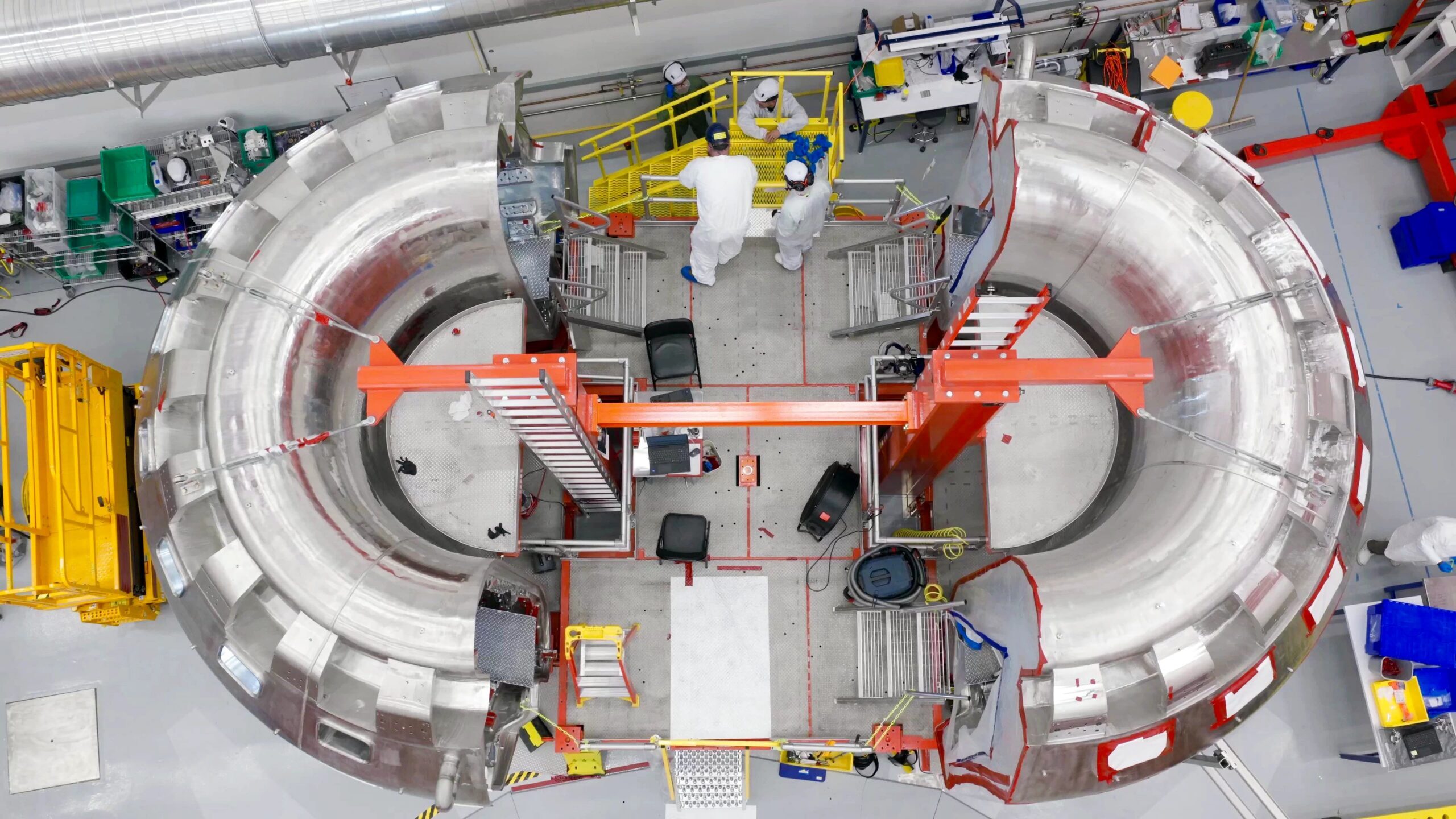
Our SPARC demonstration machine, which we’re building now at CFS headquarters in Devens, Massachusetts, is designed to reach Q>1 initially but ultimately Q=11. Our ARC power plants, though, are designed to reach higher Q levels when they start putting watts on the grid in the early 2030s. The SPARC plasmas are very close to what the ARC plasmas need to be in their temperature, density, and confinement.
Optimizing the rest of the plant remains important to reaching milestone 5, too, but that’s not a plasma physics challenge. It takes a different set of skills to design and operate your whole fusion plant. These are engineers who can get the most out of each subsystem, make the whole thing efficient, and work in harmony.
Milestone 5 is about producing net electricity that you could send to the power grid. That’s a basis for a business. But for a business to be successful, that power needs to be competitive. I haven’t talked yet about costs, or about reliability, or about construction times, or closing the fuel cycle. All those are of course important and directly impact the economics, but not the feasibility.
For more on the economic point, stay tuned for the last post in this series on milestone 6: making a power plant that’s economical enough to find a place in the energy market.
SPARC®, ARC™, and Fall Line Fusion Power Station™ are trademarks of Commonwealth Fusion Systems®.