Cryogenics: How we’ll make our fusion machine magnets colder than Pluto
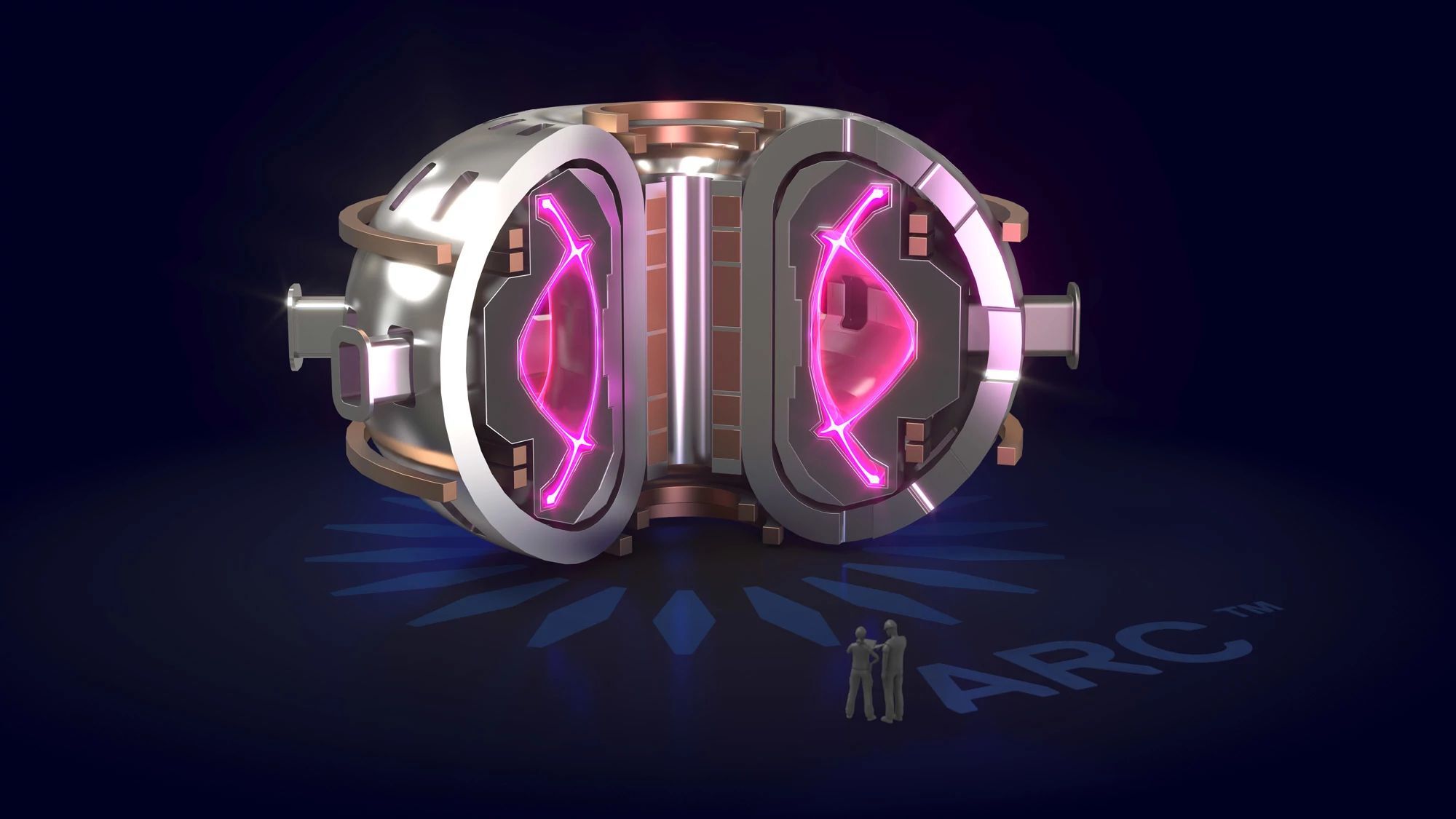
The interior of our SPARC fusion machine will be a place of extreme temperature contrast. Right next to the hottest place in the solar system — the chamber where fusion occurs — we’ll also have magnets that are among the solar system’s coldest places.
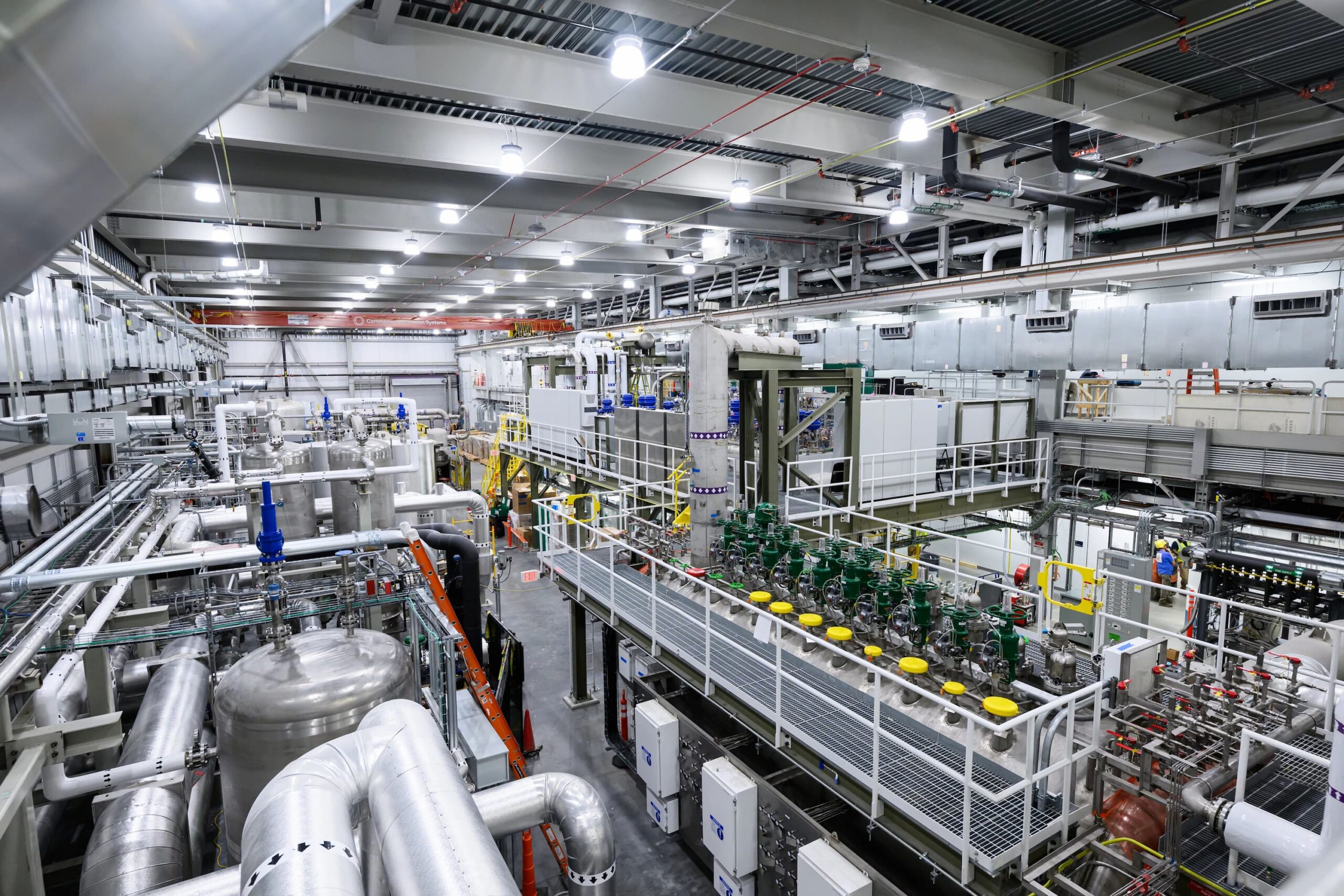
Those magnets earn a lot of attention, but they wouldn’t work without the equipment called the cryogenics system, a collection of pumps, pipes, compressors, and other hardware to cool those magnets. At Commonwealth Fusion Systems (CFS), we recently reached a crucial cryogenics goal: running the full system at its operating temperature of 8 kelvin (–445°F or –265°C).
“We’ve demonstrated an ability to cool down the system in a controlled way,” said Adam Weiner, director of cryogenics at CFS.
That temperature, a few degrees above absolute zero, is what’ll enable our magnets to bottle up a superhot cloud of charged particles called a plasma so fusion can occur. Cryogenics will play an equally crucial supporting role in our ARC fusion power plant, the ARC successor we’ll build at our Fall Line Fusion Power Station in Virginia to bring 400 megawatts of clean, safe, power to the electrical grid. And the way we tackled cryogenics embodies the CFS ethos to work as swiftly as possible to get that power on the grid.
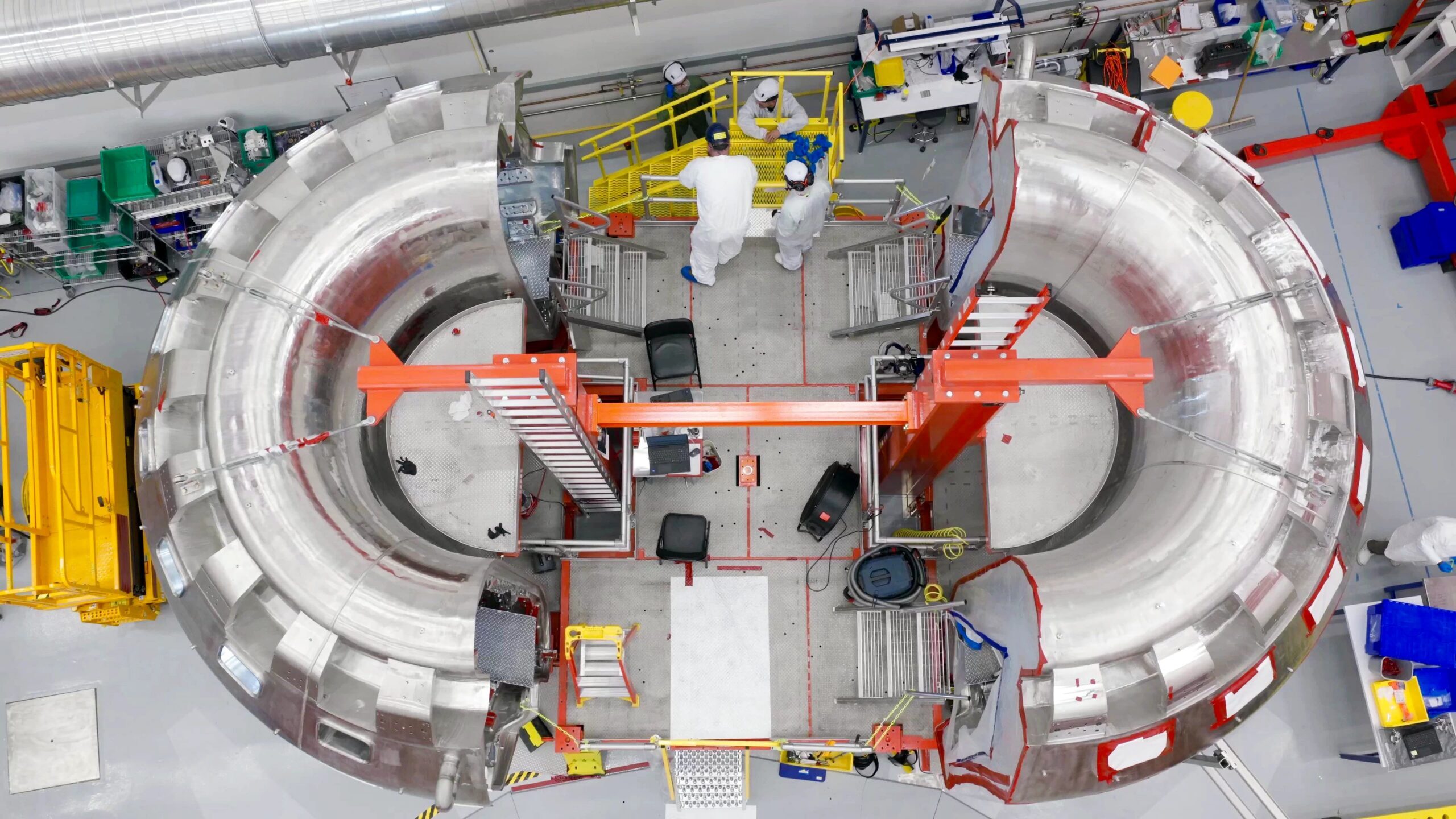
SPARC is a donut-shaped type of fusion machine called a tokamak that pioneers new magnet technology to do a better job of confining and controlling that plasma so we can generate net fusion energy, also called Q>1. In contrast, the cryogenics system is relatively ordinary: It uses the same well-understood cooling technology at work at liquified natural gas plants and many other industrial facilities around the world. It’s complicated and sophisticated — read on to hear about a couple interesting twists that CFS brings to cryogenics — but fundamentally, it’s based on the same principles that make your kitchen refrigerator work.
Some details about the cryogenic system in a nutshell:
The 8 K achievement is part of the cryogenics team’s work to commission the system, which means finding and fixing any problems so the system is ready to be put into service in SPARC operations. Broader tests are on the way, though, including an integrated test of support systems called the “dry dress rehearsal” (DDR).
That integrated support system test will link up cryogenics with systems like ones to supply magnets with power and to heat the plasma with radio waves. In essence we’ll be running all the systems surrounding the tokamak without the tokamak itself running.
This integrated test exemplifies how CFS is able to work fast by working in parallel. We’ll still have to perform more tests with the tokamak, too, but these earlier tests are like a shakedown cruise that lets us find any problems early.
“Parallelization is a strategy that we had to be really thoughtful about in terms of safety, in terms of coordination, in terms of work sequencing,” Weiner said. “But it’s paid us dividends in terms of delivering the system faster.”
Fusion, the power source of the sun, occurs when two light but highly energetic particles like hydrogen collide and merge into a heavier particle like helium. That releases energy that can be captured and converted into electricity. And that’s the idea at the heart of the CFS mission.
Handling that plasma is tough. In SPARC, it’ll be about 100 million degrees Celsius — far hotter than the interior of the sun — which means you can’t just hold it in a tank. Magnetic fields emanating invisibly from our electromagnets can do the trick, though.
Our magnets are made using superconductors, materials that carry electrical current with no resistance whatsoever as long as they’re cooled down enough.
We use a variety called high-temperature superconductors that work even at relatively balmy temperatures like 90 kelvin (–298°F or –183°C). But our cryogenics system will cool them more to achieve better performance: Superconducting won’t happen if a conductor is too warm, in too strong a magnetic field, or is carrying too much current. Cooling magnets more lets them handle our tokamak’s strong interior magnetic field and high electrical currents.
We’ll cool our D-shaped toroidal field (TF) magnets to 8 K, but two other types, the hoop-shaped poloidal field (PF) and helical central solenoid (CS) magnets, only need 15 K. And some other supporting non-superconducting magnets in SPARC need 80 K coolant. Equipment called a distribution box will route coolant where it needs to go.
Our coolant is helium cooled down and pressurized until it’s “supercritical,” a state in which it behaves somewhat like both a gas and a liquid.
For more technical details, you can check the peer-reviewed paper, The SPARC cryogenic system.
Cryogenic equipment has matured for decades, but we’ve taken some interesting approaches applying it to the SPARC facility.
First, to support our DDR testing effort, we’ve built a “turnaround tool.” It’s a big bypass pipe that lets us circulate cooled helium even before we’ve finished building the tokamak we’ll eventually need to cool.
“We get to practice getting things cold now,” said Kimbal Hall, a senior engineer on the cryogenics team. We can learn when to open and close different valves, debug our software, and figure out how to hit specific helium flow rates. “Over these next couple of months, we’re going to keep on going through our commissioning process to make sure that we’re really confident going into our first cooldown of SPARC.”
Another trick is the “blowdown” system. SPARC’s fusion process will produce a lot of heat during its most powerful fusion pulses, the 10-second runs that’ll prove our physics and help us refine our power plant design. But our cryogenic system works at a steady pace. To handle these spikes in heating activity, we’ll fill blowdown tanks with 8 K helium that we can flow rapidly through SPARC during a pulse. Over a four-hour period immediately afterward, we can recool that helium for the next pulse. (Other pulses with less intense conditions have shorter reset periods.)
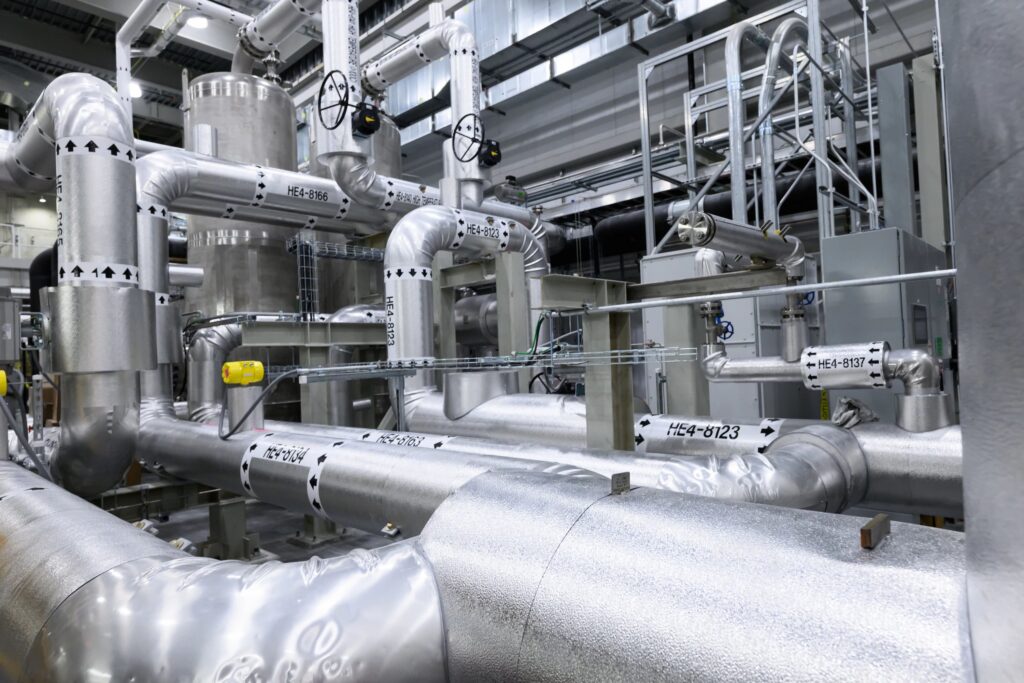
The SPARC cryogenics system is a preview of what we’ll need for our ARC power plants, though the ARC cryogenics will be simpler with no blowdown tanks and more reliable so it can run for decades.
“We’re able to take all of that learning from SPARC, understand a little bit more of what our heat load will look like, and spec what we need for our next cryo plant,” said Ashley Blasiole, a senior cryogenic engineer.
CFS started its cryogenics system work in 2020, designing the system, ordering long-lead components, installing them as they arrived on skids, and now commissioning it all.
“There’s a lot of pride. These skids that started on a piece of paper are now installed and functional,” Blasiole said. “That was no easy feat. But without cryogenics, we really wouldn’t have SPARC.”