SPARC progress, DOE Milestone approvals reflect CFS power plant maturity
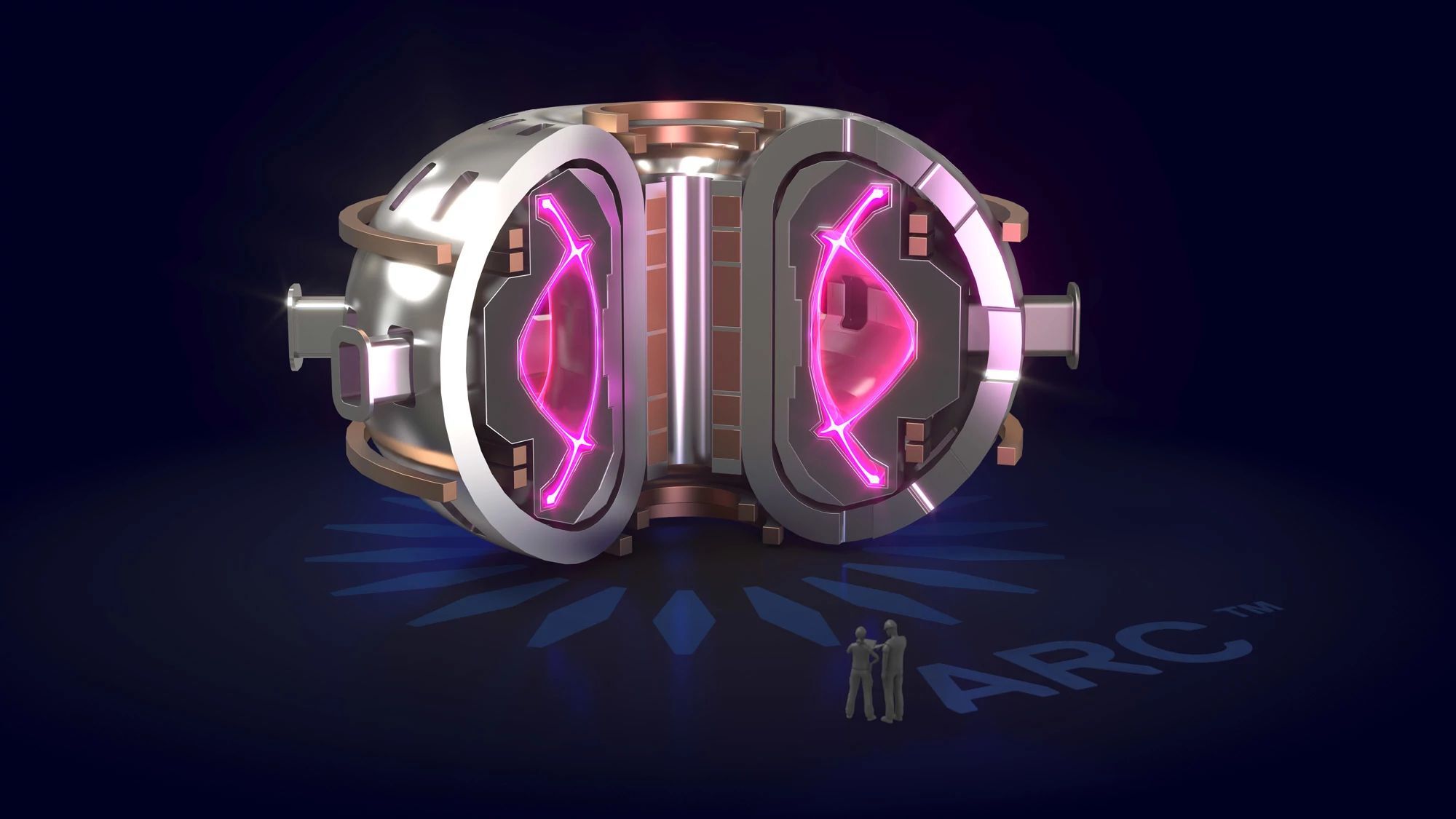
Our first three achievements as part of the U.S. Department of Energy’s Milestone-Based Fusion Development Program centered on our SPARC fusion demonstration machine. Now I’m pleased to announce that we’ve attained the next two DOE milestones in our commercial fusion effort — this time recognizing SPARC’s successor, the ARC fusion power plant.
Specifically, Commonwealth Fusion Systems (CFS) has cleared two ARC milestones: creating an ARC preconceptual design and a technology roadmap detailing steps on our path to build the ARC plant.
These steps reflect our advancements in turning decades of experience with tokamak fusion machines around the world into our own fusion power plant. And all that experience will let us accelerate the deployment of clean, secure fusion power onto the grid.
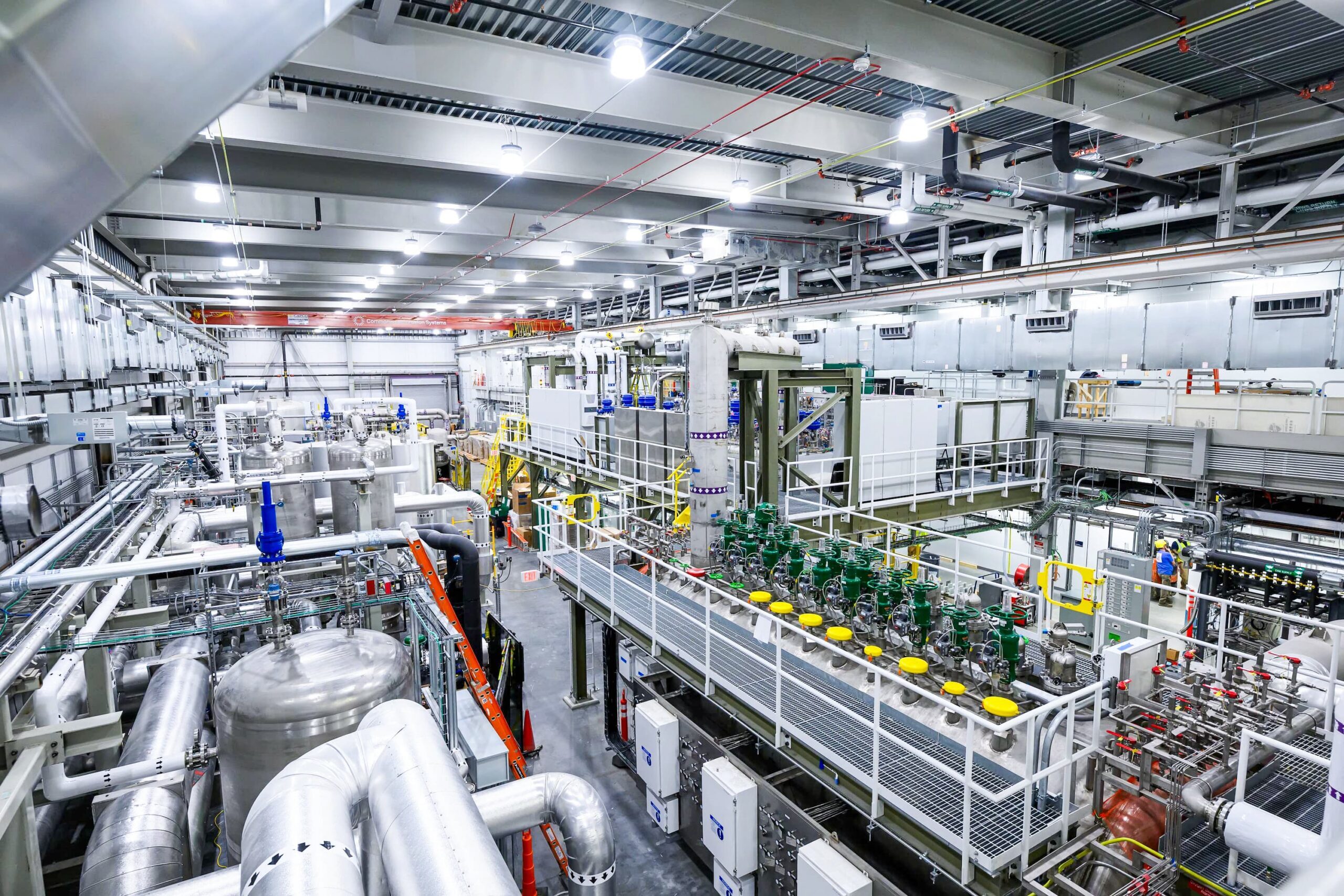
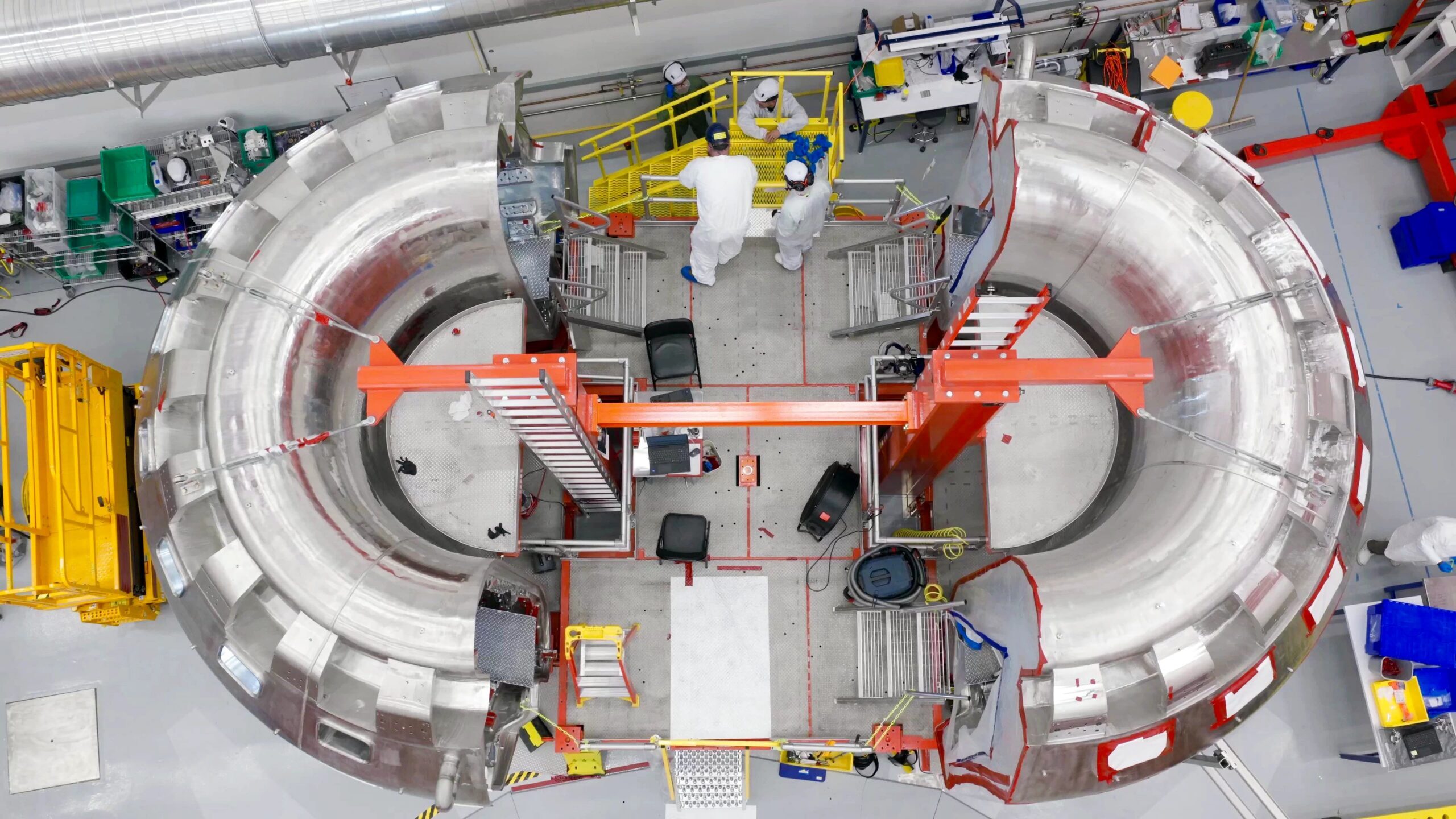
Our SPARC and ARC programs are tightly linked. SPARC, now almost 80% complete at our headquarters in CFS headquarters in Devens, Massachusetts, proves most of the technology we’ll need in the ARC plant. We’re installing the magnets we’ve manufactured at our Devens factory, we’re preparing the vacuum vessel that’ll house our plasma, and we’ve begun operating the SPARC support systems — real-world work we’ll repeat with the ARC plant.
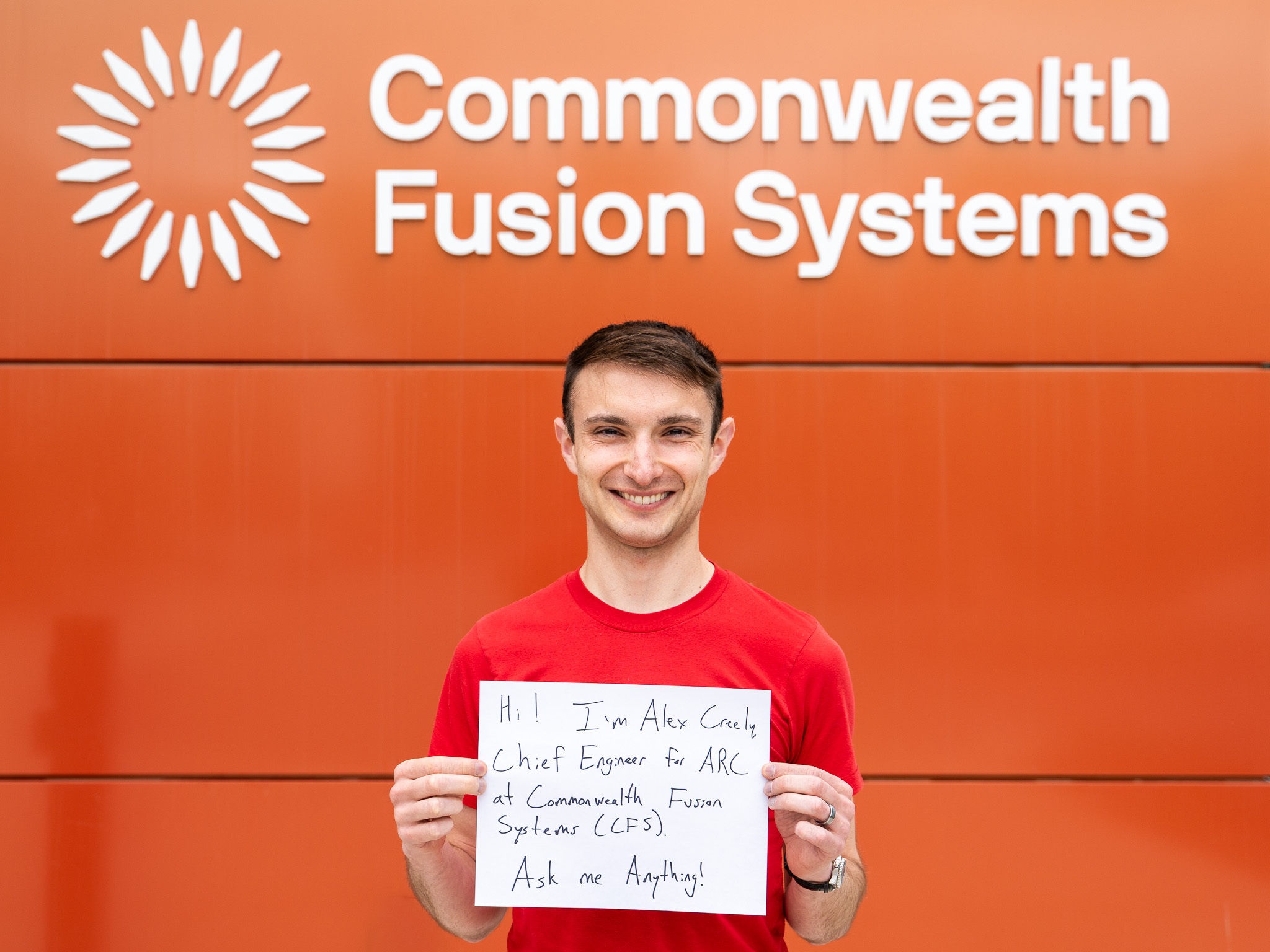
“The ARC preconceptual design is the product of an awesome engineering and scientific team using state of the art tools and building on everything we’ve learned from constructing SPARC. We’ve already made significant progress on the ARC design, demonstrated by achieving these milestones, and I’m super excited to take the next steps in designing and deploying a fusion power plant,” said Alex Creely, Chief Engineer of ARC Conceptual Design at CFS.
SPARC will be the first commercially relevant machine to demonstrate net fusion energy, a key achievement called Q>1 in scientific circles. Because the ARC power plant directly follows SPARC’s design pathway, that’ll be the proof that the heart of our ARC power plant can reliably generate grid-scale power.
Thanks to the strong SPARC–ARC link, we’ve already begun integrating what more than 1,000 CFS employees have learned about SPARC’s construction, commissioning, operations, and maintenance into the ARC design. This ability to transfer our knowledge directly from one machine to the next helped to shape our ARC preconceptual design. And once SPARC is running, the results will let us fine-tune our ARC design.
The strong capabilities we developed for SPARC let us move faster on ARC. Alongside the preconceptual design and technology roadmap work, we’re tackling long-lead parts of commercialization, like securing a zoning permit for our first ARC plant, preparing for site development work, and applying to connect the ARC plant to the grid.
In short, our capabilities from SPARC let us move rapidly toward ARC deployment so we can put electricity on the grid with our Fall Line Fusion Power Station in Chesterfield County, Virginia, in the early 2030s. And the new $1 billion investment in CFS directly supports that deployment work.
To achieve the DOE milestones for the ARC preconceptual design and technology roadmap, we developed an overall plant design for the ARC power plant and submitted it for review by an independent panel of experts assembled by DOE. This high-level assessment ensures all major engineering systems — structural, thermal, radiation, and more — are feasible and can function together seamlessly.
In addition, five peer-reviewed ARC physics basis papers we published in the Journal of Plasma Physics in June detail the core science of our ARC power plant and support these two milestones. These publications describe in detail the ARC power plant’s plasma physics and how we plan to manage the plasma’s dynamic behavior. The DOE Milestone program partially supported this work in partnership with U.S. National Laboratories and universities, including Oak Ridge National Laboratory, Princeton Plasma Physics Laboratory, the Massachusetts Institute of Technology, and Columbia University, as well as leading international institutions.
When combined with our learnings from designing, building, and operating SPARC, we’re confident in ARC’s ability to deliver 400 megawatts (MW) net electrical power. That’s enough electricity to power 280,000 average American households.
Our preconceptual design and technology roadmap milestones went through rigorous scrutiny. The DOE’s panel of 14 independent experts included subject matter experts with decades of experience in areas like remote handling, the fusion fuel cycle, plasma physics and heating systems, magnet technology, commercial power plants, plant and systems integration, and materials science.
The completion of this milestone provides a new validation of CFS’ path to commercial deployment. In 2025, we announced that the DOE approved several other milestones for CFS, including the test of a toroidal field magnet, approval of our radioactive materials license for SPARC, and for work supporting workforce development.
As part of these milestones, CFS developed a strategic technology roadmap to deploy ARC in the early 2030s. During its review, DOE vetted the specific technologies and key steps we are taking to derisk our transition from SPARC to ARC.
For example, a critical part of our roadmap is demonstrating our tritium breeding technology for the ARC power plant. We recently announced a partnership with the United Kingdom Atomic Energy Authority (UKAEA) to become the first organization to use its new Lithium Breeding Tritium Innovation (LIBRTI) facility. Through the LIBRTI collaboration, we will validate our tritium production technology, showing we can sustainably produce enough fuel to keep ARC running, and thus closing the fuel cycle for fusion power. This will inform our design as we move toward more detailed system engineering.
The DOE’s Milestone-Based Fusion Development Program is modeled after the highly successful NASA Commercial Orbital Transportation Services (COTS) program, which launched the commercial space-launch industry.
A milestone-based program is an efficient way for the government to support the creation of a new industry. In milestone programs, awardees and the government decide in advance on key technical and commercial milestones, and on the level of government support for reaching those milestones. A fixed-price payment is made only after the milestone is achieved. If a company doesn’t achieve a milestone, no payment is made, protecting taxpayers. In addition, awardees must support the majority of their own milestone costs. CFS is funding more than two-thirds of the cost of its milestones in this phase of the program.
CFS is one of eight Milestone awardees that DOE chose for the program in 2023. The public-private partnership program aims to support private companies completing their preliminary design of a fusion pilot plant. Milestones span scientific and technical, commercial, and financial proof points.
NASA set the standard for milestone-based programs. It invested $788 million into its COTS program ($1.2 billion adjusted for inflation in today’s dollars). With that investment, NASA catalyzed a space-launch industry that has reached $143 billion in annual economic activity, enabling companies like SpaceX and services like Starlink to reach a globally dominant competitive position. SpaceX’s recent IPO with a valuation approaching $2 trillion further exemplifies the power of milestone-based programs to enable the creation of new industries, generating jobs and economic growth.
CFS is executing on its roadmap, and the dawn of commercial fusion power is rapidly approaching. By funding an expanded DOE Milestone program to support cost-sharing of the first commercial demonstration fusion power plants, the U.S. can play a pivotal role in launching a new industry that guarantees America’s energy security and technological supremacy for generations to come.